I came across this article on Medscape to which I subscribe. My very vivid imagination conjured up images I would have rather not imagined as I read it...ugh...read on, if you dare...
Circumcision, Religious Freedom, and Herpes Infections in New York City
Posted 10/17/2006
Howard Markel, MD, PhD
If you ever find yourself in the coffee line at a medical conference, be prepared to eavesdrop on a gaggle of doctors exchanging the medical equivalent of "war stories," wild tales of clinical misadventures and treatment plans gone awry. It was precisely at such a venue that I heard what easily qualifies as one of the strangest — and scariest — medical tale of recent times.
It actually began in 2004 when the New York City Department of Health received reports of 3 newborn, male babies who contracted herpes simplex virus (HSV-1). All of them required weeks of hospital care and intravenous injections of powerful antiviral medication. Tragically, one of them died from the infection.
Unlike a mere cold sore or an embarrassing, painful crop of genital blisters, herpes for a newborn is truly a life-and-death matter. Aggressive and relentless, the herpes virus can destroy an infant's brain in a matter of days. Every pediatrician who notices any type of blister on a newborn's body shudders as he contemplates whether its cause is merely an abrasive blanket or, far worse, a harbinger of a systemic infection with herpes.
But the story only gets stranger. Using a mixture of detective work and medical acumen, the New York City Department of Health figured out that all of these babies contracted herpes shortly after undergoing a ritual circumcision by the same mohel, the religious figure in the Jewish faith charged with conducting the ancient and spiritually important ceremony called a bris.
Under Jewish law, the mohel is required to draw blood from the circumcision site, ostensibly to remove what the Old Testament refers to as "impurities" and what we might interpret today as germs. The thought, back then, was that a flow of blood away from the circumcision site would carry these potentially dangerous entities away from the baby. But the traditional way to do this, a practice called Metzizah bi peh, calls for the mohel to use his mouth and suck out the blood.
To be sure, this peculiar means of viral spread remains rare. Nevertheless, there have been 11 cases of male babies who contracted herpes following circumcisions that included Metzizah bi peh reported over the past 5 years in New York, Canada, and Israel. In 2005, there were 4 infected babies in New York City and all of them were circumcised by the same New York-based mohel (who only recently was persuaded to take a prolonged vacation from his line of work).
According to Dr. Thomas Frieden, New York City's Commissioner of Health, coincidence is not an explanatory option. "There is no reasonable doubt that the practice of Metzizah bi peh has infected several infants in New York City with the herpes virus, including one child who has died and another who has evidence of brain damage," said Dr. Frieden.
Given that more than 70% of all adults 40 years of age or older are infected with the herpes simplex virus; that the mouth is the most common site of HSV-1 infection; and that most adults with oral herpes do not know whether they are infected, typically do not have symptoms, but can still spread the infection to others, one can begin to understand the potential public health problems associated with such a tradition.
Indeed, this is precisely why the Chief Rabbinate in Israel and the New York-based Rabbinical Council of America, which serves more than 1000 rabbis in the United States and Canada, began urging all mohels to avoid the potential spread of infection by using a tiny, sterile glass tube to draw the blood instead of putting their mouths directly on the circumcision wound. The overwhelming majority of mohels working today follow this interpretation of the custom.
Yet the ultra-Orthodox Hasidic Jewish community persists in adhering to ancient law precisely as it was written. That is, after all, what "orthodox" means. And despite the hedging and explaining by their less orthodox counterparts, Hasidic rabbis insist that performing the bris exactly as it was described in the Bible is essential to what it means to be Jewish.
So when the New York City Department of Health proposed a voluntary ban on the practice, the Hasidic community tersely told the government agency not to interfere in their religious beliefs or practices. Indeed, the ultra-Orthodox Hasidic community, one that has a great deal of political clout in New York City politics, has pledged to fight any health edicts restricting the ancient practice with the proverbial tooth and nail.
Even if such a law could be written, how would you enforce it? After all, the bris is almost always performed in the parents' home, out of the view of the health department or a police officer.
Certainly this means of contracting a deadly infection is rare. Only 7 cases of mohel-related herpes have been reported in New York since 1998, and each year there are 2000 to 4000 circumcisions performed in that city alone. But rare does not mean nonexistent. No one can deny that this practice presents a real and serious health risk.
Just as frightening, there have been reports of other Jewish parents who, while less exacting in their religious practices, hired ultra-Orthodox mohels without knowledge that they practiced the potentially risky Metzizah bi peh procedure.
Dr. Frieden, the same public health crusader who managed to get cigarettes banned from all public spaces in New York City, admits that negotiating the rocky shoals of this controversy represents the "most delicate issue I have had to deal with."
"My ideal would be to inform the community so that they stop doing this and a large part of the Jewish community has accepted it," Dr. Frieden explained to me in an interview. "But this issue is far from over and it is still going on among those who are most Orthodox. If it were simple, we would have dealt with it simply."
That's an understatement. It has been years since I studied Talmud, but I know what my Rabbi would have uttered in response to this quandary of Biblical proportions: "Oyyyy."
Howard Markel, MD, PhD, George E. Wantz Professor of the History of Medicine, Professor of Pediatrics and Communicable Diseases, Director of the Center for the History of Medicine, University of Michigan, Ann Arbor; author of When Germs Travel: Six Major Epidemics and the Fears They Have Unleashed (Pantheon Books)
Disclosure: Howard Markel, MD, PhD, has disclosed no relevant financial relationships.
Medscape Pediatrics. 2006;8(2) ©2006 Medscape
Thursday, October 26, 2006


Wanderlust (II)
I’ve always wanted to see & experience new places. When I was young, I used to imagine myself under the Big Sky of Montana, or enjoying the sea breeze on the Greek Isles, or skiing the slopes of the Alps. Perhaps it was a presage of what my life has become as an adult with my own family.
We’ve moved multiple times in the last decade and a half, two of those moves halfway across the globe. I consider myself a global citizen, my ideas, perceptions, & values having been shaped (& still being shaped) by diverse & varied life experiences. An old classmate from Medical School commented recently that I have had a somewhat unusual life, compared to the rest of my cohort.
I don’t think this kind of life is for everyone. I know a few of my closest friends are befuddled at how I can do what I do. But it’s not that strange or unusual a lifestyle after all. There is a small percentage of the people of the world who are quasi-nomadic in nature. Their jobs bring them to different parts of the world, often far & vastly different from their home country. Their families are relocated every few years. Previously, these were mainly military families who went where they were directed to go. Now, with the globalization of so many companies, businesses are expanding to places all over the world, sending their senior managers to these places to help run their organizations. And these employees bring along there spouses & kids to unfamiliar environs.
Their kids are known as third culture kids. One usually finds these children in international schools, getting to know kids in the same shoes, from other cultures & ethnicities. And because they don’t live in their home country, they develop a unique culture of their own, assimilating views & opinions from their international friends.
I don’t think I would consider my kids TCKs. Half their lives were spent in their passport country, while the other half in their mom’s passport country. And part of the latter was spent assimilated in a local school while the other part in an international school. Perhaps a more suitable term would be “Different Cultured Kids”. I am not sure how this will affect them as adults. With our impending move to China, doubts & fears of settling into & living in such a different country arise, especially for my children, as they have to make new friends & get used to a new school. Heck, I will have to make new friends as well!!! And make do with less English movies/books/TV programs (sigh).
Despite how daunting the move may be, what I am sure of is that ultimately, their experiences & my own, will be unique and enriching. At least, we will be able to learn proper Mandarin!
We’ve moved multiple times in the last decade and a half, two of those moves halfway across the globe. I consider myself a global citizen, my ideas, perceptions, & values having been shaped (& still being shaped) by diverse & varied life experiences. An old classmate from Medical School commented recently that I have had a somewhat unusual life, compared to the rest of my cohort.
I don’t think this kind of life is for everyone. I know a few of my closest friends are befuddled at how I can do what I do. But it’s not that strange or unusual a lifestyle after all. There is a small percentage of the people of the world who are quasi-nomadic in nature. Their jobs bring them to different parts of the world, often far & vastly different from their home country. Their families are relocated every few years. Previously, these were mainly military families who went where they were directed to go. Now, with the globalization of so many companies, businesses are expanding to places all over the world, sending their senior managers to these places to help run their organizations. And these employees bring along there spouses & kids to unfamiliar environs.
Their kids are known as third culture kids. One usually finds these children in international schools, getting to know kids in the same shoes, from other cultures & ethnicities. And because they don’t live in their home country, they develop a unique culture of their own, assimilating views & opinions from their international friends.
I don’t think I would consider my kids TCKs. Half their lives were spent in their passport country, while the other half in their mom’s passport country. And part of the latter was spent assimilated in a local school while the other part in an international school. Perhaps a more suitable term would be “Different Cultured Kids”. I am not sure how this will affect them as adults. With our impending move to China, doubts & fears of settling into & living in such a different country arise, especially for my children, as they have to make new friends & get used to a new school. Heck, I will have to make new friends as well!!! And make do with less English movies/books/TV programs (sigh).
Despite how daunting the move may be, what I am sure of is that ultimately, their experiences & my own, will be unique and enriching. At least, we will be able to learn proper Mandarin!
Driving you crazy

And I thought driving in Singapore was bad.
I literally feared for my life while traversing the streets of downtown Beijing as a passenger as well as a pedestrian. This is what I learnt about traffic in Beijing:
A) Pedestrians DO NOT have right of way, no matter what color the little man is on the traffic light. It’s survival of the fittest as far as crossing the road is concerned. It seems like you almost need to have a death wish or at least faith that The Force Is With You. Even the pavements are not safe – you may suddenly find yourself leaping out of the way of a cyclist who decides that the pavement is a quicker (& less risky) way to get to his destination.
B) Horns in China are activated when you depress the brakes (& I suspect the accelerator as well). You honk when you need to let your fellow motorists/errant pedestrians/cyclist know to “Watch out, I am coming”/”Get out of the way”/”Move, you idiot”.
C) Cyclists are an entity unto their own – they have their own traffic rules which basically states that anything goes as long as you don’t get knocked down or don’t knock down anybody else.
Thank God I don’t have to drive when we move there.
I literally feared for my life while traversing the streets of downtown Beijing as a passenger as well as a pedestrian. This is what I learnt about traffic in Beijing:
A) Pedestrians DO NOT have right of way, no matter what color the little man is on the traffic light. It’s survival of the fittest as far as crossing the road is concerned. It seems like you almost need to have a death wish or at least faith that The Force Is With You. Even the pavements are not safe – you may suddenly find yourself leaping out of the way of a cyclist who decides that the pavement is a quicker (& less risky) way to get to his destination.
B) Horns in China are activated when you depress the brakes (& I suspect the accelerator as well). You honk when you need to let your fellow motorists/errant pedestrians/cyclist know to “Watch out, I am coming”/”Get out of the way”/”Move, you idiot”.
C) Cyclists are an entity unto their own – they have their own traffic rules which basically states that anything goes as long as you don’t get knocked down or don’t knock down anybody else.
Thank God I don’t have to drive when we move there.
Wednesday, October 18, 2006
goodbye, old friend.
just when i thought i was all cried out,
the tears start to flow again
trying to fill the void in our lives.
goodbye, old friend.
go in peace.
the tears start to flow again
trying to fill the void in our lives.
goodbye, old friend.
go in peace.
In The News
Pg H3, HOME Section, The Straits Times, October 18, 2006
Dispute Mediation helps both patients and dentists – Patients avoid legal bills and dentists pay less for insurance
by Salma Khalik
Hmm.
I didn’t realize that the Singapore Dental Association’s Ethics Committee handles mediation in patient-dentist disputes.
I wonder why the Singapore Medical Association doesn’t have a committee to do the same? Or at least facilitate the formation of a committee to do the same. I, for one, know that it is sorely needed.
Pg 23, World News, The Straits Times, Oct 18, 2006
Fast Track to Citizenship: Join the US military
This is an article taken from Reuters.
I find it ironic that PRs/immigrants in the United States are literally dying to take up US citizenship while Singaporeans & PRs here try all ways & means to get out of doing NS, or at least, to get their PES rating downgraded.
So much for patriotism, eh? It’s no wonder that the ICS responded to a reader’s suggestion to allow dual citizenship with this letter:
Oct 14, 2006
Singapore not ready for dual citizenship
I REFER to the letter by Mr Bertrand Teo Ming Shan, 'Can ICA be flexible in dual citizenship case?' (ST, Sept 27).
Dual citizenship is a policy that has to be considered carefully and thoroughly.
We have yet to reach the stage of nationhood where a Singaporean with a second citizenship would still retain his identity and loyalty to Singapore as his homeland wherever he goes, with his second citizenship being only of secondary importance.
Lim Jing Jing (Ms)
Senior Public & Internal Communications Executive
Immigration & Checkpoints Authority
Pg 20, World News, The Straits Times, Oct 18, 2006
Disabled girl without a home.
This story is about a girl named Charlotte Wyatt who was born 3 months premature in October 2004. Her parents had fought in the courts to require that doctors provide artificial ventilation if her condition worsened. I guess they succeeded, because she is still alive, albeit with serious brain, lung & kidney damage. Her treatment apparently costs close to S$900 a day; she requires 3 litres of oxygen every minute; she is fed & medicated through a nasal tube. Her parents are now separated (apparently due to the strain of coping with this situation), & now, social workers are looking for foster parents to look after Charlotte as both mum & dad are unable to do so.
I had previously blogged about this issue of sustaining life at all costs as part of an earlier entry.
Is it worth it?
Live Cell Therapy???
And finally, I spotted an ad in the Mind Your Body section of the papers for an organization called Villa Medica Asia which is “one of the few approved clinics to administer the live cell therapy”. A google search revealed that indications for this therapy which involves injection of animal derived cellular material into the patient, includes a whole host of conditions, ranging from exhaustion to menopause to retarded development in children! Wow!
Hmm (again). I wonder how MOH/SMC/SMA will respond to this amazing & miraculous treatment.
Dispute Mediation helps both patients and dentists – Patients avoid legal bills and dentists pay less for insurance
by Salma Khalik
Hmm.
I didn’t realize that the Singapore Dental Association’s Ethics Committee handles mediation in patient-dentist disputes.
I wonder why the Singapore Medical Association doesn’t have a committee to do the same? Or at least facilitate the formation of a committee to do the same. I, for one, know that it is sorely needed.
Pg 23, World News, The Straits Times, Oct 18, 2006
Fast Track to Citizenship: Join the US military
This is an article taken from Reuters.
I find it ironic that PRs/immigrants in the United States are literally dying to take up US citizenship while Singaporeans & PRs here try all ways & means to get out of doing NS, or at least, to get their PES rating downgraded.
So much for patriotism, eh? It’s no wonder that the ICS responded to a reader’s suggestion to allow dual citizenship with this letter:
Oct 14, 2006
Singapore not ready for dual citizenship
I REFER to the letter by Mr Bertrand Teo Ming Shan, 'Can ICA be flexible in dual citizenship case?' (ST, Sept 27).
Dual citizenship is a policy that has to be considered carefully and thoroughly.
We have yet to reach the stage of nationhood where a Singaporean with a second citizenship would still retain his identity and loyalty to Singapore as his homeland wherever he goes, with his second citizenship being only of secondary importance.
Lim Jing Jing (Ms)
Senior Public & Internal Communications Executive
Immigration & Checkpoints Authority
Pg 20, World News, The Straits Times, Oct 18, 2006
Disabled girl without a home.
This story is about a girl named Charlotte Wyatt who was born 3 months premature in October 2004. Her parents had fought in the courts to require that doctors provide artificial ventilation if her condition worsened. I guess they succeeded, because she is still alive, albeit with serious brain, lung & kidney damage. Her treatment apparently costs close to S$900 a day; she requires 3 litres of oxygen every minute; she is fed & medicated through a nasal tube. Her parents are now separated (apparently due to the strain of coping with this situation), & now, social workers are looking for foster parents to look after Charlotte as both mum & dad are unable to do so.
I had previously blogged about this issue of sustaining life at all costs as part of an earlier entry.
Is it worth it?
Live Cell Therapy???
And finally, I spotted an ad in the Mind Your Body section of the papers for an organization called Villa Medica Asia which is “one of the few approved clinics to administer the live cell therapy”. A google search revealed that indications for this therapy which involves injection of animal derived cellular material into the patient, includes a whole host of conditions, ranging from exhaustion to menopause to retarded development in children! Wow!
Hmm (again). I wonder how MOH/SMC/SMA will respond to this amazing & miraculous treatment.
Tuesday, October 17, 2006
Wanderlust (I)
We will pay a visit to our ancestral homeland this week, my husband, our sons & I. This is part of our preparation for our eventual move there…a reconnaissance, if you will. This will be the very first time that I will step foot into the Middle Kingdom. I have never felt any pull to this country before. Any interest I've ever had to visit comes from a sense of wanting to experience different cultures & lifestyles, rather than from a need to “find my roots”.
Years ago, our forefathers left this continent for foreign shores, either under threat of persecution, or to seek their fortunes. Some planned to return after they had made their fortune, while others planned to grow roots in their new home countries.
Those who did not return spawned generations who developed their own culture, some very different from that of their ancestors. There are those who say that this is a bad thing. I disagree, as I believe that culture is a dynamic organism, which evolves & changes with the times. It is part of progression. This is not to say that we should forget the achievements of all those who have gone before us. But we shouldn’t dwell on the past & hold on to old practices & beliefs just because they were what our ancestors did.
I know this will be an eye-opening experience for us. I think it will show how different, and yet how similar, we all are, as human beings. I said the same thing about what I learned while living in the USA. Some will think that I am being deliberately paradoxical, but I’m not. Honestly.
Years ago, our forefathers left this continent for foreign shores, either under threat of persecution, or to seek their fortunes. Some planned to return after they had made their fortune, while others planned to grow roots in their new home countries.
Those who did not return spawned generations who developed their own culture, some very different from that of their ancestors. There are those who say that this is a bad thing. I disagree, as I believe that culture is a dynamic organism, which evolves & changes with the times. It is part of progression. This is not to say that we should forget the achievements of all those who have gone before us. But we shouldn’t dwell on the past & hold on to old practices & beliefs just because they were what our ancestors did.
I know this will be an eye-opening experience for us. I think it will show how different, and yet how similar, we all are, as human beings. I said the same thing about what I learned while living in the USA. Some will think that I am being deliberately paradoxical, but I’m not. Honestly.
Thursday, October 12, 2006
Medical Tourism
Looks like Singapore is not the only country outsourcing its medical services. Dr Parker blogs about this phenomenon happening in the USA, where healthcare costs are ridiculously high, thanks to high insurance premiums & (IMHO) high litigation rates.
Unsurprisingly, this is creating a lot of unhappiness in the medical community & the patient's union. Quality of care, medical liability & follow-up care, especially in the face of possible complications are issues which have been raised & understandably so.
This particular patient is supposed to go for rotator cuff surgery & cholecystectomy in India. He would also go sightseeing on a two day tour that includes a visit to the Taj Mahal. The cost of the operations would be only 1/5 of that in the USA - a huge savings for his employer. But question is: who is going to take care of him if he develops complications post-op? Will the American insurance company still cover him for any medical care received as a result of such complications?
I know of someone whose brother, suffering from renal failure & undergoing hemodialysis for the past 20 years, decided to travel to China for a kidney transplant. It cost him about $60,000. Apparently he was hospitalised for a week before being sent home. He did develop post-op infection & required ICU care. His original nephrologist here refused to manage this problem, & he had to seek treatment in a different hospital.
Now we all have heard of the dubiosity (is there such a word??) of organ transplants done in China, & how the origins of these organs are rather hazy. (From executed prisoners? Sold by someone in need of money?) But aside from that, is it ethical for a doctor to refuse to give treatment to a seriously ill patient, who developed complications from such a procedure? No, I say. We may disagree with the patient's decision to go through the procedure. But we should not punish the patient by making life harder for him after.
The medical communities in countries where healthcare costs are escalating have to examine all these questions ASAP. Outsourcing is NOT going to go away. Especially in a world where money talks the loudest in most cases.
Unsurprisingly, this is creating a lot of unhappiness in the medical community & the patient's union. Quality of care, medical liability & follow-up care, especially in the face of possible complications are issues which have been raised & understandably so.
This particular patient is supposed to go for rotator cuff surgery & cholecystectomy in India. He would also go sightseeing on a two day tour that includes a visit to the Taj Mahal. The cost of the operations would be only 1/5 of that in the USA - a huge savings for his employer. But question is: who is going to take care of him if he develops complications post-op? Will the American insurance company still cover him for any medical care received as a result of such complications?
I know of someone whose brother, suffering from renal failure & undergoing hemodialysis for the past 20 years, decided to travel to China for a kidney transplant. It cost him about $60,000. Apparently he was hospitalised for a week before being sent home. He did develop post-op infection & required ICU care. His original nephrologist here refused to manage this problem, & he had to seek treatment in a different hospital.
Now we all have heard of the dubiosity (is there such a word??) of organ transplants done in China, & how the origins of these organs are rather hazy. (From executed prisoners? Sold by someone in need of money?) But aside from that, is it ethical for a doctor to refuse to give treatment to a seriously ill patient, who developed complications from such a procedure? No, I say. We may disagree with the patient's decision to go through the procedure. But we should not punish the patient by making life harder for him after.
The medical communities in countries where healthcare costs are escalating have to examine all these questions ASAP. Outsourcing is NOT going to go away. Especially in a world where money talks the loudest in most cases.
Wednesday, October 11, 2006
DNR
Here is an interesting entry about CPR & DNR in response to a New York Times article, The Last Word on the Last Breath.
I was surprised that an actual analysis was done & published in the NEJM on survival rates in CPR on TV!
I remember how dismal the success rate was during my stint in A & E oh-so-many years ago. Most of the patients who were admitted collapsed had already been down for more than 15 minutes. At that time (I don't know about now), the paramedical staff in the ambulances did not do intubations on the field. So most of the time, our efforts in the department were basically "going-through-the-motions" for a reasonable amount of time, before pronouncing death. Most of these collapsed patients had pre-existing co-morbidities & elderly or were victims of severe trauma, so our efforts were not unexpectedly futile. I remember the sickening crunch of breaking ribs while I did chest compressions, especially in the elderly & frail.
The only time I managed to bring back a patient was a gentleman in his 50's suffering from an acute exacerbation of COPD, who, right in front of my eyes, desaturated & went into ventricular fibrillation. Immediate CPR was instituted, & he was successfully resuscitated & immediately sent up to the medical ICU (whose MO was not terribly happy with accepting this very ill patient, but hey, what to do, A & E in those days were not equipped or staffed to monitor patients requiring close monitoring).
Even in the wards, many family members still insisted on going all out for the patient in spite of how gravely ill that patient was. Perhaps they didn't realise how traumatic CPR can be on an already weakened body. I can certainly understand why letting go is hard.
When my time comes, I will make sure that my family understands my wishes & let me go in peace. I admit I have yet to sign an AMD nor have I made a living will. It's one of those things which one keeps putting off, thinking that one still has time to do it. I really should get off my a** & get it done...
I was surprised that an actual analysis was done & published in the NEJM on survival rates in CPR on TV!
I remember how dismal the success rate was during my stint in A & E oh-so-many years ago. Most of the patients who were admitted collapsed had already been down for more than 15 minutes. At that time (I don't know about now), the paramedical staff in the ambulances did not do intubations on the field. So most of the time, our efforts in the department were basically "going-through-the-motions" for a reasonable amount of time, before pronouncing death. Most of these collapsed patients had pre-existing co-morbidities & elderly or were victims of severe trauma, so our efforts were not unexpectedly futile. I remember the sickening crunch of breaking ribs while I did chest compressions, especially in the elderly & frail.
The only time I managed to bring back a patient was a gentleman in his 50's suffering from an acute exacerbation of COPD, who, right in front of my eyes, desaturated & went into ventricular fibrillation. Immediate CPR was instituted, & he was successfully resuscitated & immediately sent up to the medical ICU (whose MO was not terribly happy with accepting this very ill patient, but hey, what to do, A & E in those days were not equipped or staffed to monitor patients requiring close monitoring).
Even in the wards, many family members still insisted on going all out for the patient in spite of how gravely ill that patient was. Perhaps they didn't realise how traumatic CPR can be on an already weakened body. I can certainly understand why letting go is hard.
When my time comes, I will make sure that my family understands my wishes & let me go in peace. I admit I have yet to sign an AMD nor have I made a living will. It's one of those things which one keeps putting off, thinking that one still has time to do it. I really should get off my a** & get it done...
Monday, October 09, 2006
Heartbreak
I am an emotional wreck. We have made the heartbreaking decision to put down our very old, very large dog whom we’ve had since she was a pup. She has not been doing well since we moved into an apartment over a year ago. Arthritis, cataracts, incontinence – diseases of age – afflict her & makes it hard for her to get up & walk on ceramic tiles, & she leaks pee if you don’t bring her downstairs fast enough. Hard for everyone.
I’ve been putting off this decision while desperately trying to find a good home with a garden for her to enjoy her last years with some degree of comfort but alas, in a country where most people live in government housing that disallows dogs beyond a certain size, it has been a futile effort. The fact that she is almost 11 years old, weighs 80 lbs & has these health problems don’t help either. It would be hard to find anyone willing to accept a pet like this, & not fair to burden someone else with these problems. We looked at a no-kill shelter to see if it was an option but seeing how overwhelmed they are with the number of dogs they have to foster, we didn’t see how our dog could be happy in that kind of situation.
Euthanasia is emotion-ridden. I think my reluctance to face this ultimate decision is partly for selfish reasons too. I don’t want to go through the trauma of loss & grief. Tears have come at the most unlikely moments. But I need to also think about the quality of life issue. Should I, due to my selfishness, allow her to go on like that? It breaks my heart each time I see her trying to struggle to get up so that we can bring her down for her toilet break. I suspect she has some degree of heart failure as well, as she pants really hard from just walking less than 100 m.
This is hard, and it involves an animal. How much harder would it be if it involved a human life. I can’t imagine how Dr Kevorkian did what he did, although if you look at it in a cold, clinical & detached way, it sounds like a logical solution to an existence wrought with pain & suffering. Problem is, as human beings, we aren’t cold or detached when it comes to a loved one. At least, we shouldn’t be. As for being clinical, well, the arguments for and against euthanasia among the medical community have been & will always be an ongoing & controversial one.
Stop crying, aliendoc.
Note: In my opinion, euthanasia & the Advance Medical Directive are two different issues.
I’ve been putting off this decision while desperately trying to find a good home with a garden for her to enjoy her last years with some degree of comfort but alas, in a country where most people live in government housing that disallows dogs beyond a certain size, it has been a futile effort. The fact that she is almost 11 years old, weighs 80 lbs & has these health problems don’t help either. It would be hard to find anyone willing to accept a pet like this, & not fair to burden someone else with these problems. We looked at a no-kill shelter to see if it was an option but seeing how overwhelmed they are with the number of dogs they have to foster, we didn’t see how our dog could be happy in that kind of situation.
Euthanasia is emotion-ridden. I think my reluctance to face this ultimate decision is partly for selfish reasons too. I don’t want to go through the trauma of loss & grief. Tears have come at the most unlikely moments. But I need to also think about the quality of life issue. Should I, due to my selfishness, allow her to go on like that? It breaks my heart each time I see her trying to struggle to get up so that we can bring her down for her toilet break. I suspect she has some degree of heart failure as well, as she pants really hard from just walking less than 100 m.
This is hard, and it involves an animal. How much harder would it be if it involved a human life. I can’t imagine how Dr Kevorkian did what he did, although if you look at it in a cold, clinical & detached way, it sounds like a logical solution to an existence wrought with pain & suffering. Problem is, as human beings, we aren’t cold or detached when it comes to a loved one. At least, we shouldn’t be. As for being clinical, well, the arguments for and against euthanasia among the medical community have been & will always be an ongoing & controversial one.
Stop crying, aliendoc.
Note: In my opinion, euthanasia & the Advance Medical Directive are two different issues.
Friday, October 06, 2006
Compassion
"At the behest of Amish leaders, a fund has also been set up for the gunman's wife and his three children." YAHOO! News: Donations to Help Amish families (AP)
If one could find a silver lining behind the darkest of clouds, this would be it. The compassion shown by this gentle community for the family of the man who killed their young is something that should be emulated.
The Amish live in Lancaster County, Pennsylvania. I remember making road trips to this picturesque area, our car often having to follow behind horse-drawn buggies on the streets. Parking lots included areas of buggy parking. Towns with unlikely names like Bird-In-Hand & Intercourse (!!!), restaurants with names like "Good & Plenty" and "Plain & fancy", featuring traditional Amish (& very fattening) food like fried chicken, Chow Chow (a vege dish), Shoo-fly pie (so named, because its sugar content attracts flies!)...all these bring back fond memories of our lives in Pennsylvania. The Amish eschew modern conveniences like automobiles & electricity, and dress in plain clothes, the men wearing the characteristic broad-brimmed hats. They still speak in an old German dialect (despite the misnomer Pennsylvania Dutch, they originated from Germany, fleeing persecution because of their religious teachings.
If one could find a silver lining behind the darkest of clouds, this would be it. The compassion shown by this gentle community for the family of the man who killed their young is something that should be emulated.
The Amish live in Lancaster County, Pennsylvania. I remember making road trips to this picturesque area, our car often having to follow behind horse-drawn buggies on the streets. Parking lots included areas of buggy parking. Towns with unlikely names like Bird-In-Hand & Intercourse (!!!), restaurants with names like "Good & Plenty" and "Plain & fancy", featuring traditional Amish (& very fattening) food like fried chicken, Chow Chow (a vege dish), Shoo-fly pie (so named, because its sugar content attracts flies!)...all these bring back fond memories of our lives in Pennsylvania. The Amish eschew modern conveniences like automobiles & electricity, and dress in plain clothes, the men wearing the characteristic broad-brimmed hats. They still speak in an old German dialect (despite the misnomer Pennsylvania Dutch, they originated from Germany, fleeing persecution because of their religious teachings.
Tuesday, October 03, 2006
Live Long & Prosper

Not for these people. First this. Then this. And now this.
Despite being married to an American & having lived in the US for several years in a typical suburban neighborhood, & pretty much assimilated into the lifestyle there, I still don’t get the obsession of some Americans with the “right to bear arms” portion of the Constitution.
My husband has tried explaining it to me from the perspective of American history & how, when the constitution was first written, it was meant to protect the citizens from tyranny. I can understand that scenario back in the 18th & 19th century, when lawlessness was rampant & there were no proper law enforcement agencies in existence or available to those living in remote areas of the country.
But now, in the 21st century, I don’t get it. I know that there ARE responsible gun owners. But there are also nutsos out there who, due to warped reasons of their own, decide out of the blue, that he needs to kill some people.
Then there are kids out there as well, hormone-ridden, angst-filled youths, trying to get by in the stressful times of modern day living, who have easy accessibility to their parents’ guns or rifles, who one day decide that it would be cool to use their fellow schoolmates as target practice.
I guess having been brought up with Asian values which places society above self (for the most part, anyway), it’s hard for me to support this “right to bear arms” argument. If I had to choose between that & an innocent’s right to live, it’s a no-brainer.
Despite being married to an American & having lived in the US for several years in a typical suburban neighborhood, & pretty much assimilated into the lifestyle there, I still don’t get the obsession of some Americans with the “right to bear arms” portion of the Constitution.
My husband has tried explaining it to me from the perspective of American history & how, when the constitution was first written, it was meant to protect the citizens from tyranny. I can understand that scenario back in the 18th & 19th century, when lawlessness was rampant & there were no proper law enforcement agencies in existence or available to those living in remote areas of the country.
But now, in the 21st century, I don’t get it. I know that there ARE responsible gun owners. But there are also nutsos out there who, due to warped reasons of their own, decide out of the blue, that he needs to kill some people.
Then there are kids out there as well, hormone-ridden, angst-filled youths, trying to get by in the stressful times of modern day living, who have easy accessibility to their parents’ guns or rifles, who one day decide that it would be cool to use their fellow schoolmates as target practice.
I guess having been brought up with Asian values which places society above self (for the most part, anyway), it’s hard for me to support this “right to bear arms” argument. If I had to choose between that & an innocent’s right to live, it’s a no-brainer.
Tuesday, September 26, 2006
Words of Wisdom
I want to give this writer a standing ovation.
Patients and doctors must be loyal to each other
I REFER to the letter, 'Fees aside, pick the right hospital and doctor' by Ms Virginia Goh Min Wen and Dr Victor Teoh (ST, Sept 22).
It is obviously prudent in matters of health, to choose a hospital not based on the cost of treatment but the clinical outcome or effectiveness of therapy.
At the same time, it is not only the skills of the specialist or the quality of the equipment in a hospital that determines good clinical outcome.
Most of all, a patient needs a doctor who will act continually in his best interest.
Patients need doctors who are loyal and place their welfare as their first consideration, even at times at the expense of subjugation of the doctor's personal interest.
Patients, like all humans, have multiple and often varying interests.
Doctors, like all professionals, have multiple interests and commitments.
Some personal interests of doctors which may come into conflict with their professional obligation and thus the patient's welfare and interests include accumulation of wealth, fame, academic position or rank, or even the promotion of scientific innovation.
In today's medical-commercial complex, doctors can inadvertently be drawn to promote the interests of the pharmaceutical industry, companies that produce medical devices and equipment, insurance companies and even hospital bottom lines.
When conflicts of interest arise, there may be, in extreme cases, neglect of professional duties but more often a compromise of the independence of clinical judgment.
In a medical encounter, it is not only the knowledge and skills of the doctor that are important in the clinical outcome but also the independence and quality of the clinical judgment.
The judgment may be tainted so as not to serve the patient's best interest.
The clinical judgment can be compared to the plan and strategy of the diagnosis and therapy.
Thus, even with careful and expert execution, an inappropriate plan and strategy will not lead to a good outcome.
In addition, it is important for patients and the public to know that in the rapidly changing knowledge and technology of modern medicine, medical uncertainties are a common feature of medical practice.
New therapies and technology may not be fully validated.
Protocols of therapy continue to change and many areas of disease and treatment are still unknown.
Every patient brings his own special features to the illness and therapy.
There are large grey areas in medicine where the doctor must exercise clinical judgment.
Independent and good clinical judgment, based on scientific facts, clinical skills and experience and based on the particular patient's context, needs to exercised to serve the best interest of the patient.
To act in the best interest of his patient, the doctor must not only be up to date in his knowledge and skills on the diagnosis and various treatment options, but must also have a good knowledge of his patient and his interests.
Equally important, the doctor must have knowledge of himself and his motivation.
Unfortunately, in the hospital setting when a patient seeks a specialist consultation, the clinical encounter is transient and between strangers.
Many times, patients hardly remember the name of the specialist they consult, let alone the medical information exchanged.
The specialist who sees several patients a day remembers them as diagnostic labels in medical notes.
Specialisation in medicine no doubt increases expertise and more proficient practice.
At the same time, it runs the risk of compartmentalising the patient to organs and waters down the quality of the doctor-patient relationship.
For patients to benefit from a good clinical outcome, optimally utilising medical facilities at affordable cost, a collaborative effort is required between the generalist family physician who knows the patient well and the specialist who has the special skills to carry out the treatment.
It is not always easy for anyone, let alone the patient, to judge whether his doctor is acting in his best interest and welfare.
However, some professional behaviours are surrogate markers to show the doctor is acting in the patient's best interest.
A doctor who spends time and effort giving medical information and options to empower the patient to participate effectively in medical decision making, tells of his concern for the patient's interest.
A doctor who acts in the best interest of his patients not only keeps up to date with his skills and knowledge, but also fills in any gaps by not hesitating to consult his colleagues and getting a second opinion.
One's medical colleagues often have a better insight of their another's clinical competence and patient-centeredness of practice.
Thus the value of a medical referral to a specialist by the family physician.
Unfortunately, in today's society, the climate for and culture of having a regular primary or family physician is not strong.
For patients and their families to run around by themselves seeking the right hospital, right doctor and right specialist for the patient's illness is a common phenomenon locally termed 'hospital (or doctor) hopping'.
Information from books and the Internet leaves many gaps.
Hospital and doctor hopping is nearly always detrimental to the patient's welfare, whether in acute illness or chronic disease care.
It also erodes loyalty and continuity of care.
Nor is it cost-efficient.
The simple formula in choosing the right doctor for the patient, for a good clinical outcome at affordable cost, is for patients and doctors to be loyal to each other and communicate effectively.
The challenge for policymakers and the medical leadership is to build a climate, culture and system which will ensure and promote this loyalty and communication.
Dr T. Thirumoorthy
Patients and doctors must be loyal to each other
I REFER to the letter, 'Fees aside, pick the right hospital and doctor' by Ms Virginia Goh Min Wen and Dr Victor Teoh (ST, Sept 22).
It is obviously prudent in matters of health, to choose a hospital not based on the cost of treatment but the clinical outcome or effectiveness of therapy.
At the same time, it is not only the skills of the specialist or the quality of the equipment in a hospital that determines good clinical outcome.
Most of all, a patient needs a doctor who will act continually in his best interest.
Patients need doctors who are loyal and place their welfare as their first consideration, even at times at the expense of subjugation of the doctor's personal interest.
Patients, like all humans, have multiple and often varying interests.
Doctors, like all professionals, have multiple interests and commitments.
Some personal interests of doctors which may come into conflict with their professional obligation and thus the patient's welfare and interests include accumulation of wealth, fame, academic position or rank, or even the promotion of scientific innovation.
In today's medical-commercial complex, doctors can inadvertently be drawn to promote the interests of the pharmaceutical industry, companies that produce medical devices and equipment, insurance companies and even hospital bottom lines.
When conflicts of interest arise, there may be, in extreme cases, neglect of professional duties but more often a compromise of the independence of clinical judgment.
In a medical encounter, it is not only the knowledge and skills of the doctor that are important in the clinical outcome but also the independence and quality of the clinical judgment.
The judgment may be tainted so as not to serve the patient's best interest.
The clinical judgment can be compared to the plan and strategy of the diagnosis and therapy.
Thus, even with careful and expert execution, an inappropriate plan and strategy will not lead to a good outcome.
In addition, it is important for patients and the public to know that in the rapidly changing knowledge and technology of modern medicine, medical uncertainties are a common feature of medical practice.
New therapies and technology may not be fully validated.
Protocols of therapy continue to change and many areas of disease and treatment are still unknown.
Every patient brings his own special features to the illness and therapy.
There are large grey areas in medicine where the doctor must exercise clinical judgment.
Independent and good clinical judgment, based on scientific facts, clinical skills and experience and based on the particular patient's context, needs to exercised to serve the best interest of the patient.
To act in the best interest of his patient, the doctor must not only be up to date in his knowledge and skills on the diagnosis and various treatment options, but must also have a good knowledge of his patient and his interests.
Equally important, the doctor must have knowledge of himself and his motivation.
Unfortunately, in the hospital setting when a patient seeks a specialist consultation, the clinical encounter is transient and between strangers.
Many times, patients hardly remember the name of the specialist they consult, let alone the medical information exchanged.
The specialist who sees several patients a day remembers them as diagnostic labels in medical notes.
Specialisation in medicine no doubt increases expertise and more proficient practice.
At the same time, it runs the risk of compartmentalising the patient to organs and waters down the quality of the doctor-patient relationship.
For patients to benefit from a good clinical outcome, optimally utilising medical facilities at affordable cost, a collaborative effort is required between the generalist family physician who knows the patient well and the specialist who has the special skills to carry out the treatment.
It is not always easy for anyone, let alone the patient, to judge whether his doctor is acting in his best interest and welfare.
However, some professional behaviours are surrogate markers to show the doctor is acting in the patient's best interest.
A doctor who spends time and effort giving medical information and options to empower the patient to participate effectively in medical decision making, tells of his concern for the patient's interest.
A doctor who acts in the best interest of his patients not only keeps up to date with his skills and knowledge, but also fills in any gaps by not hesitating to consult his colleagues and getting a second opinion.
One's medical colleagues often have a better insight of their another's clinical competence and patient-centeredness of practice.
Thus the value of a medical referral to a specialist by the family physician.
Unfortunately, in today's society, the climate for and culture of having a regular primary or family physician is not strong.
For patients and their families to run around by themselves seeking the right hospital, right doctor and right specialist for the patient's illness is a common phenomenon locally termed 'hospital (or doctor) hopping'.
Information from books and the Internet leaves many gaps.
Hospital and doctor hopping is nearly always detrimental to the patient's welfare, whether in acute illness or chronic disease care.
It also erodes loyalty and continuity of care.
Nor is it cost-efficient.
The simple formula in choosing the right doctor for the patient, for a good clinical outcome at affordable cost, is for patients and doctors to be loyal to each other and communicate effectively.
The challenge for policymakers and the medical leadership is to build a climate, culture and system which will ensure and promote this loyalty and communication.
Dr T. Thirumoorthy
Duh Moments
Duh Moment #1
Patient needs PAP Smear done. I tell her to undress & lie on couch while I prepare the equipment. I return to the examination couch & notices that she still has her underwear on.
Me: "Er...you need to remove your underwear in order for me to do the PAP Smear."
Patient: "Oh, is it? I need to remove my underwear?"
Me: "Er...yeah" (Inner Me: "Duh")
Duh Moment #2
Patient complains of headache. After taking history, I tell her I am going to check her blood pressure.
Patient: "Do you want me to take off my watch?"
Me: "Er...no." (Inner Me:"Duh")
Patient needs PAP Smear done. I tell her to undress & lie on couch while I prepare the equipment. I return to the examination couch & notices that she still has her underwear on.
Me: "Er...you need to remove your underwear in order for me to do the PAP Smear."
Patient: "Oh, is it? I need to remove my underwear?"
Me: "Er...yeah" (Inner Me: "Duh")
Duh Moment #2
Patient complains of headache. After taking history, I tell her I am going to check her blood pressure.
Patient: "Do you want me to take off my watch?"
Me: "Er...no." (Inner Me:"Duh")
Saturday, September 23, 2006
Heroes
I stumbled upon this new series called Heroes starting in the US on NBC Sept 25 while I was perusing my son's latest installment of Civil War (a new Marvel comic series) - OK, OK, I admit it, I still read comics...
Anyway, take a look at the trailer. I think it's going to be a hit & will especially appeal to superhero/comic/scifi/fantasy fans & geeks (like me!). We need a bit of fantasy & optimism especially when we are bombarded daily by news of bombs & terrorists & coups & wars.
Let's hope Mediacorp brings it in.
Anyway, take a look at the trailer. I think it's going to be a hit & will especially appeal to superhero/comic/scifi/fantasy fans & geeks (like me!). We need a bit of fantasy & optimism especially when we are bombarded daily by news of bombs & terrorists & coups & wars.
Let's hope Mediacorp brings it in.
A Xanax Moment
I think I need some Xanax.
Why? Well, we’ve just found out that we will be moving to China.
Oh, don’t get me wrong, I am actually feeling very excited about this new adventure. But I’ve some trepidation about the transition. Been getting tension headaches the last couple of weeks while awaiting final news (which we received this past week) on this.
Things like the kids’ schooling: how they will adapt, whether there will be continuity in what they are studying here & what they will be studying there, the timing of the transfer - should we let them finish off the school year (which ends middle of next year) before moving them over (but then this would involve some logistical acrobatics as A’s new position starts next month) or transfer them in the middle of the school year (i.e. Dec!!!) so that the whole family stays together.
Things like what to do with our home: Sell? Or rent?
Our (very old & large) dog with a few health problems – a heartbreaking decision will have to be made here.
I think I had a mild anxiety attack last night while thinking about all this - slight chest tightness with a sensation that I couldn’t quite inhale completely. It lasted only a few seconds.
A. doesn’t understand why I get all angst-y (that word again!). I guess that’s the “Men are from Mars, Women are from Venus” thing going on. We women tend to think things through to the bone, gnawing over every small detail ESPECIALLY anything involving our children & their well-being. Guys? They just breeze through, with the attitude that they can conquer any obstacles in their way as long as our immediate needs (Food & Shelter) are taken care of.
Breathe, aliendoc, breathe…
Why? Well, we’ve just found out that we will be moving to China.
Oh, don’t get me wrong, I am actually feeling very excited about this new adventure. But I’ve some trepidation about the transition. Been getting tension headaches the last couple of weeks while awaiting final news (which we received this past week) on this.
Things like the kids’ schooling: how they will adapt, whether there will be continuity in what they are studying here & what they will be studying there, the timing of the transfer - should we let them finish off the school year (which ends middle of next year) before moving them over (but then this would involve some logistical acrobatics as A’s new position starts next month) or transfer them in the middle of the school year (i.e. Dec!!!) so that the whole family stays together.
Things like what to do with our home: Sell? Or rent?
Our (very old & large) dog with a few health problems – a heartbreaking decision will have to be made here.
I think I had a mild anxiety attack last night while thinking about all this - slight chest tightness with a sensation that I couldn’t quite inhale completely. It lasted only a few seconds.
A. doesn’t understand why I get all angst-y (that word again!). I guess that’s the “Men are from Mars, Women are from Venus” thing going on. We women tend to think things through to the bone, gnawing over every small detail ESPECIALLY anything involving our children & their well-being. Guys? They just breeze through, with the attitude that they can conquer any obstacles in their way as long as our immediate needs (Food & Shelter) are taken care of.
Breathe, aliendoc, breathe…
Saturday, September 16, 2006
Friday, September 15, 2006
No Survivor?
Hmmm.
This is an interesting development.
Survivor 13 : Cook Islands started today in the US. And I notice Mediacorp hasn't got it on its TV schedule. Somewhat strange seeing that every single season of Survivor has been broadcast on the same day as the US so far.
Could it be the fact that a racial theme has been used to divide up the teams? Is Mediacorp afraid that Singaporeans won't be able to take it? Will our sensibilities be SOOOO affected by this racial divide? Are our values & morals so weak that they are afraid that this multiracial harmony in which we exist will be destroyed by this TV program?
I wait with bated breath to find out...
This is an interesting development.
Survivor 13 : Cook Islands started today in the US. And I notice Mediacorp hasn't got it on its TV schedule. Somewhat strange seeing that every single season of Survivor has been broadcast on the same day as the US so far.
Could it be the fact that a racial theme has been used to divide up the teams? Is Mediacorp afraid that Singaporeans won't be able to take it? Will our sensibilities be SOOOO affected by this racial divide? Are our values & morals so weak that they are afraid that this multiracial harmony in which we exist will be destroyed by this TV program?
I wait with bated breath to find out...
Letters to the Forum
Why do people write letters like this to the newspaper?
"No lunch served on SIA's flight from S'pore to Shanghai
I recently took SQ826 flight to Shanghai, departing Singapore at 8am and arriving at Shanghai at 1.30pm. I was very disappointed that no lunch was served on board. Food was served at about 9am to 10am, which was called brunch. It was breakfast to me.
When I asked about lunch, I was told that only one meal was served on that flight. I pointed out that the flight only landed at 1.30pm, so the one meal in the morning was not sufficient to fill our stomach. I was feeling hungry then, but the stewardess could only offer me cup noodles, peanuts or biscuits.
I was disappointed that not even light snacks were served during lunch time. Other airlines normally provide main meals and light snacks on board. SIA's management should ensure that passengers are served sufficient meals on board.
Tan Saw Bin (Ms)"
This lady could very well have written to SIA directly to voice her complaint and give her suggestions. I find it hard to understand the mentality of such people. It's the same with medical-related complaint letters. Instead of going straight to the hospital or clinic with their issues, patients or their kin write to the newspaper.
And it looks like this letter is going to open another can of worms...
"Don't salvage lives that will weigh on family
THE article, 'Parents of the disabled have a long list of woes'' (ST, Sept 13), serves as a launching pad for me to write to ST Forum on a topic I have felt very strongly about for a long time.
Of the long list of woes, one dominates that of all elderly parents: 'Who will look after my child after I pass on?' Many parents have expressed this concern to me.
In other cases, I have reminded younger parents to cease their globe-trotting in search of a miracle cure and set aside funds to provide for their disabled child while not neglecting their other children.
For those who can afford it, I advise them about setting up a trust fund. But many do not have enough money to provide for their disabled offspring for as long as the patient will live.
I understand the parents' pain and burden because I see it so often. It is one of the reasons I have written to ST Forum more than once about not salvaging lives that will be a burden to their family and society.
My conviction was further strengthened last Tuesday when a patient in his 50s, who I have seen for more than 15 years, came for his annual check-up with his sister.
Surprised, I asked what happened to the father who was the one who brought the patient every time.
'He passed away' was the sister's answer.
'But he looked in good health when I saw him last year.'
'Actually, he jumped and killed himself. He meant to take my brother with him but could not do so.'
I was greatly saddened. The father had asked me for help to find a nursing home for his son two years ago. I gave him a list and he phoned each of them, promising to will everything to the home which would promise to look after his son.
He had a landed property which he lived in, but that too would be willed to the home when he died.
Last year, he told me sadly that all the homes wanted money upfront and turned him down.
As medicine advances, more and more brain-damaged patients will be salvaged. We doctors are playing God all the time though we pretend we should not.
We are trapped between the old days when many of these disabled patients would die because medicine could do no better, and a rational era (which may never come) where doctors and families can come to a rational decision that 'enough is enough'.
As a First World country where millions of dollars are being poured into making us a cultured and vibrant society, could a few million dollars be spared to build nursing homes for disabled patients whose parents are getting too old to look after them any longer?
Dr Lee Wei Ling "
Our esteemed colleague had previously written into the papers with her views on the surgery performed on the Nepalese twins, one of whom apparently is not doing well, requiring full-time care from her family. I suspect this letter will also trigger off a spew of responses.
I can't say that I disagree with her views entirely, especially where it comes to building nursing homes for disabled patients or at least, some kind of daycare or support facilities to help care-givers with what must be an extremely difficult situation. I myself have asked the question "Why?" many times when I did my rotation through Neonatology, resuscitating premies, & taking care of severely ill neonates. Many end up vegetative or with terribly compromising health conditions likely leading to lifelong complications which tax not only the wallets of their parents, but are also emotionally draining. But it was not my call to deny or withhold available treatment. When called to resus, you resus.
Perhaps I am cold-hearted, but personally, if I had a child whom I KNEW was going to go through life with a multitude of health problems if we kept him/her alive with all our modern medical means, I would rather let him/her go peacefully instead of having to suffer through a life of questionable quality.
"No lunch served on SIA's flight from S'pore to Shanghai
I recently took SQ826 flight to Shanghai, departing Singapore at 8am and arriving at Shanghai at 1.30pm. I was very disappointed that no lunch was served on board. Food was served at about 9am to 10am, which was called brunch. It was breakfast to me.
When I asked about lunch, I was told that only one meal was served on that flight. I pointed out that the flight only landed at 1.30pm, so the one meal in the morning was not sufficient to fill our stomach. I was feeling hungry then, but the stewardess could only offer me cup noodles, peanuts or biscuits.
I was disappointed that not even light snacks were served during lunch time. Other airlines normally provide main meals and light snacks on board. SIA's management should ensure that passengers are served sufficient meals on board.
Tan Saw Bin (Ms)"
This lady could very well have written to SIA directly to voice her complaint and give her suggestions. I find it hard to understand the mentality of such people. It's the same with medical-related complaint letters. Instead of going straight to the hospital or clinic with their issues, patients or their kin write to the newspaper.
And it looks like this letter is going to open another can of worms...
"Don't salvage lives that will weigh on family
THE article, 'Parents of the disabled have a long list of woes'' (ST, Sept 13), serves as a launching pad for me to write to ST Forum on a topic I have felt very strongly about for a long time.
Of the long list of woes, one dominates that of all elderly parents: 'Who will look after my child after I pass on?' Many parents have expressed this concern to me.
In other cases, I have reminded younger parents to cease their globe-trotting in search of a miracle cure and set aside funds to provide for their disabled child while not neglecting their other children.
For those who can afford it, I advise them about setting up a trust fund. But many do not have enough money to provide for their disabled offspring for as long as the patient will live.
I understand the parents' pain and burden because I see it so often. It is one of the reasons I have written to ST Forum more than once about not salvaging lives that will be a burden to their family and society.
My conviction was further strengthened last Tuesday when a patient in his 50s, who I have seen for more than 15 years, came for his annual check-up with his sister.
Surprised, I asked what happened to the father who was the one who brought the patient every time.
'He passed away' was the sister's answer.
'But he looked in good health when I saw him last year.'
'Actually, he jumped and killed himself. He meant to take my brother with him but could not do so.'
I was greatly saddened. The father had asked me for help to find a nursing home for his son two years ago. I gave him a list and he phoned each of them, promising to will everything to the home which would promise to look after his son.
He had a landed property which he lived in, but that too would be willed to the home when he died.
Last year, he told me sadly that all the homes wanted money upfront and turned him down.
As medicine advances, more and more brain-damaged patients will be salvaged. We doctors are playing God all the time though we pretend we should not.
We are trapped between the old days when many of these disabled patients would die because medicine could do no better, and a rational era (which may never come) where doctors and families can come to a rational decision that 'enough is enough'.
As a First World country where millions of dollars are being poured into making us a cultured and vibrant society, could a few million dollars be spared to build nursing homes for disabled patients whose parents are getting too old to look after them any longer?
Dr Lee Wei Ling "
Our esteemed colleague had previously written into the papers with her views on the surgery performed on the Nepalese twins, one of whom apparently is not doing well, requiring full-time care from her family. I suspect this letter will also trigger off a spew of responses.
I can't say that I disagree with her views entirely, especially where it comes to building nursing homes for disabled patients or at least, some kind of daycare or support facilities to help care-givers with what must be an extremely difficult situation. I myself have asked the question "Why?" many times when I did my rotation through Neonatology, resuscitating premies, & taking care of severely ill neonates. Many end up vegetative or with terribly compromising health conditions likely leading to lifelong complications which tax not only the wallets of their parents, but are also emotionally draining. But it was not my call to deny or withhold available treatment. When called to resus, you resus.
Perhaps I am cold-hearted, but personally, if I had a child whom I KNEW was going to go through life with a multitude of health problems if we kept him/her alive with all our modern medical means, I would rather let him/her go peacefully instead of having to suffer through a life of questionable quality.
Tuesday, September 12, 2006
Singapore Dreaming & the IMF/World Bank meetings
The latest local movie production, Singapore Dreaming, opened last week. One of its producers is fellow doctor, acclaimed plastic surgeon, Woffles Wu. Together with husband & wife team, Colin Goh & Dr Woo Yen Yen, they do a credible job in creating something that shows the heart & soul of Singapore.
It revolves around the lives of an average Chinese-Singaporean family. Dad, Loh Poh Huat, is the typical wannabe, disdainful of HDB dwellers, & counting the days when he strikes Toto & can afford to move into his dream condo & buy his dream car & join an elite country club. Mum is a housewife, content with her duties of keeping house, cooking & brewing ‘liang teh’ (herbal tea) everyday for the family. Oldest child is Mei, a secretary married to an ex-Army regular, C.K., who now struggles to earn a living by selling life insurance. Mei has always struggled for her parents' love & attention, and being born a girl is a great disadvantage in this struggle. Younger offspring is Seng, the precious son, the ne’er-do-good, sent off to the golden land of America to get a degree from an American university so that he can return after graduating to earn a good living & repay the money spent by his father & his long-suffering fiancée, Irene, to support his studies. Or so it is hoped.
A multitude of local social issues are laid bare: our obsession with the 5C’s, our oftentimes hypocritical attitudes towards domestic maids, urinating in lifts, the preferential treatment shown to sons vs daughters. Swipes are taken at the kiasu-ism of Singaporeans, with a mother shown admonishing her kindergarten-aged son rather violently for scoring 95% in a spelling test instead of 100% like his classmate. Dr Woffles Wu even makes a cameo appearance as a family friend paying his condolences at the wake of the ill-fated Loh (“No need to give so much, OK,” he tells his wife softly, as they approach Mei to give her their condolence money, “They won 2 million dollars, you know.”)
It was a raw experience, watching it. So raw that it was almost painful. Although it sometimes seemed that the storytellers were trying to squeeze too many issues into one movie, it was all very real & familiar to me, as a Singaporean. Seeing it all exposed on the big screen made it almost embarrassing to be a Singaporean, although at the end of the story, everyone gets his/her comeuppance.
And what does Singapore Dreaming have to do with the IMF/World Bank meetings? Nothing direct, really (apart from the fact that the movie opened in local theatres just 4 days prior to the start of the meetings – hmmmmm…coincidence? ☺ ). It just made me think of all the aesthetic remodeling & “cosmetic surgery” (all of which would have done Dr Wu proud ☺) that has been taking place in the preceding few months to pretty up this little island of ours. After watching the movie, it became more obvious that we really needed all the surface touch-ups.
It revolves around the lives of an average Chinese-Singaporean family. Dad, Loh Poh Huat, is the typical wannabe, disdainful of HDB dwellers, & counting the days when he strikes Toto & can afford to move into his dream condo & buy his dream car & join an elite country club. Mum is a housewife, content with her duties of keeping house, cooking & brewing ‘liang teh’ (herbal tea) everyday for the family. Oldest child is Mei, a secretary married to an ex-Army regular, C.K., who now struggles to earn a living by selling life insurance. Mei has always struggled for her parents' love & attention, and being born a girl is a great disadvantage in this struggle. Younger offspring is Seng, the precious son, the ne’er-do-good, sent off to the golden land of America to get a degree from an American university so that he can return after graduating to earn a good living & repay the money spent by his father & his long-suffering fiancée, Irene, to support his studies. Or so it is hoped.
A multitude of local social issues are laid bare: our obsession with the 5C’s, our oftentimes hypocritical attitudes towards domestic maids, urinating in lifts, the preferential treatment shown to sons vs daughters. Swipes are taken at the kiasu-ism of Singaporeans, with a mother shown admonishing her kindergarten-aged son rather violently for scoring 95% in a spelling test instead of 100% like his classmate. Dr Woffles Wu even makes a cameo appearance as a family friend paying his condolences at the wake of the ill-fated Loh (“No need to give so much, OK,” he tells his wife softly, as they approach Mei to give her their condolence money, “They won 2 million dollars, you know.”)
It was a raw experience, watching it. So raw that it was almost painful. Although it sometimes seemed that the storytellers were trying to squeeze too many issues into one movie, it was all very real & familiar to me, as a Singaporean. Seeing it all exposed on the big screen made it almost embarrassing to be a Singaporean, although at the end of the story, everyone gets his/her comeuppance.
And what does Singapore Dreaming have to do with the IMF/World Bank meetings? Nothing direct, really (apart from the fact that the movie opened in local theatres just 4 days prior to the start of the meetings – hmmmmm…coincidence? ☺ ). It just made me think of all the aesthetic remodeling & “cosmetic surgery” (all of which would have done Dr Wu proud ☺) that has been taking place in the preceding few months to pretty up this little island of ours. After watching the movie, it became more obvious that we really needed all the surface touch-ups.
Monday, September 11, 2006
9/11
Five years past,
In disbelief I watched,
Mouth agape,
As planes smashed
One after the other
Into the two towers,
Televised “live” on CNN.
Oh my God, oh my God, oh my God.
This can’t be real,
It can’t be happening,
It must be a trick,
A camera trick,
A scene taken from a movie.
Then they fell
Like a stack of cards,
One after the other
Within seconds,
In a rising cloud of dust
That spread throughout Manhattan.
Another plane
Smashed into the Pentagon,
Another one into a field in Pennsylvania
One after the other.
Was that it? Was that it? Are there more?
Please, no more, no more, please.
Oh my God, oh my God, oh my God.
It felt surreal,
My mind numbed
By the thought of all those lives
Snuffed by unimaginable evil.
Terror transmitted halfway across the globe
Through the wonders of technology.
It was real
And yet unreal.
We lost our innocence
That fateful day,
No more trust
In our fellow man.
We have to find our way again,
Someone help us find our way again
Five years ago, on the night (in Singapore) of Sept 11, I watched CNN broadcast "live" as planes smashed into the two towers of the World Trade Center. It was an almost out-of-body experience, as my brain numbed, & my heart screamed "No!!!" in terror & disbelief, while I watched the buildings crumble down into nothingness.
I called A immediately - he was away on a business trip - he would call his mother as soon as we hung up. He had heard the news but had not seen the terror screened on the tube. She lives less than 15 blocks from where it happened. Fortunately, she slept through it (amazingly) as she is a late riser. He told her to keep her windows shut, & not to venture out into the streets due to the uncertainty of the situation. She had a freezer stocked to the brim with food, thankfully.
After that conversation, it became impossible to contact her as the phone exchanges in that area had been affected by the destruction. For three weeks we remained incommunicado, but was fortunate that A's best friend who lived in Brooklyn was able to contact her & let us know that she was OK despite the area being cordoned off.
Although America has recovered outwardly from this assault, scars remain from that fateful day. Although unspoken, suspicion remains of those who are of a particular faith, or who look & dress a certain way. But can one blame them?
My younger son still worries about his dad's plane crashing when A goes on his frequent business trips despite my reassurances that taking the plane is safer than driving a car. Until recently, he always made sure that whenever possible, A & I were accompanied by either him, or his older brother, whenever we went out, so that they could protect us in case we were "attacked" by terrorists. A sweet but illogical sentiment. But can one blame him? We lost our innocence five years ago.
In disbelief I watched,
Mouth agape,
As planes smashed
One after the other
Into the two towers,
Televised “live” on CNN.
Oh my God, oh my God, oh my God.
This can’t be real,
It can’t be happening,
It must be a trick,
A camera trick,
A scene taken from a movie.
Then they fell
Like a stack of cards,
One after the other
Within seconds,
In a rising cloud of dust
That spread throughout Manhattan.
Another plane
Smashed into the Pentagon,
Another one into a field in Pennsylvania
One after the other.
Was that it? Was that it? Are there more?
Please, no more, no more, please.
Oh my God, oh my God, oh my God.
It felt surreal,
My mind numbed
By the thought of all those lives
Snuffed by unimaginable evil.
Terror transmitted halfway across the globe
Through the wonders of technology.
It was real
And yet unreal.
We lost our innocence
That fateful day,
No more trust
In our fellow man.
We have to find our way again,
Someone help us find our way again
Five years ago, on the night (in Singapore) of Sept 11, I watched CNN broadcast "live" as planes smashed into the two towers of the World Trade Center. It was an almost out-of-body experience, as my brain numbed, & my heart screamed "No!!!" in terror & disbelief, while I watched the buildings crumble down into nothingness.
I called A immediately - he was away on a business trip - he would call his mother as soon as we hung up. He had heard the news but had not seen the terror screened on the tube. She lives less than 15 blocks from where it happened. Fortunately, she slept through it (amazingly) as she is a late riser. He told her to keep her windows shut, & not to venture out into the streets due to the uncertainty of the situation. She had a freezer stocked to the brim with food, thankfully.
After that conversation, it became impossible to contact her as the phone exchanges in that area had been affected by the destruction. For three weeks we remained incommunicado, but was fortunate that A's best friend who lived in Brooklyn was able to contact her & let us know that she was OK despite the area being cordoned off.
Although America has recovered outwardly from this assault, scars remain from that fateful day. Although unspoken, suspicion remains of those who are of a particular faith, or who look & dress a certain way. But can one blame them?
My younger son still worries about his dad's plane crashing when A goes on his frequent business trips despite my reassurances that taking the plane is safer than driving a car. Until recently, he always made sure that whenever possible, A & I were accompanied by either him, or his older brother, whenever we went out, so that they could protect us in case we were "attacked" by terrorists. A sweet but illogical sentiment. But can one blame him? We lost our innocence five years ago.
Friday, September 08, 2006
TV Land
RS: Supernova
Final four are Dilana, Toby, Magni & Lukas.
Storm was ousted last week after repeated being in the bottom 3. I guess Supernova has to listen to the fans. She gave a heart-wrenching performance of Pink Floyd's "Wish You Were Here" which brought even Jason Newsted (Bass Guitarist) to tears; but that was not enough to save her.
Toby's original composition, "Throw It Away" won him the encore (and a brand new Honda!) which he dedicated to fellow Aussie, Crocodile Hunter, the late Steve Irwin. His rousing & energetic performance had everyone singing along. A potential chart-topper, it had excellent guitar riffs, brilliantly performed by the House Band's Rafael Moreira.
My faves to win? Either Dilana or Toby. Dilana has had a rough couple of weeks, & her popularity has dropped after her foot-in-mouth debacle with the media. She still gives impressive performances, although her weakness in songwriting may proof to be detrimental. Toby has the looks, talent & charisma to capture fans for Supernova, especially those of the female persuasion! And in an industry driven by popularity & moolah (more fans=more albums sold=more$$$!), this could give him the edge over Dilana.
Entourage
I loved the most recent episode screened this week! Vince Chase (Adrian Grenier), low on funds after committing himself to buying a multimillion dollar house, decides to do an ad for a Red Bull-like product targeted at the Chinese market. Bai Ling guested as the stunt co-ordinator, to teach him martial arts moves for the ad. She ended up teaching him not only kungfu moves, but also techniques totally unrelated to martial arts (ahem!). The episode ended with the final product - the ad itself, dubbed in Mandarin. Absolutely Brilliant!
Final four are Dilana, Toby, Magni & Lukas.
Storm was ousted last week after repeated being in the bottom 3. I guess Supernova has to listen to the fans. She gave a heart-wrenching performance of Pink Floyd's "Wish You Were Here" which brought even Jason Newsted (Bass Guitarist) to tears; but that was not enough to save her.
Toby's original composition, "Throw It Away" won him the encore (and a brand new Honda!) which he dedicated to fellow Aussie, Crocodile Hunter, the late Steve Irwin. His rousing & energetic performance had everyone singing along. A potential chart-topper, it had excellent guitar riffs, brilliantly performed by the House Band's Rafael Moreira.
My faves to win? Either Dilana or Toby. Dilana has had a rough couple of weeks, & her popularity has dropped after her foot-in-mouth debacle with the media. She still gives impressive performances, although her weakness in songwriting may proof to be detrimental. Toby has the looks, talent & charisma to capture fans for Supernova, especially those of the female persuasion! And in an industry driven by popularity & moolah (more fans=more albums sold=more$$$!), this could give him the edge over Dilana.
Entourage
I loved the most recent episode screened this week! Vince Chase (Adrian Grenier), low on funds after committing himself to buying a multimillion dollar house, decides to do an ad for a Red Bull-like product targeted at the Chinese market. Bai Ling guested as the stunt co-ordinator, to teach him martial arts moves for the ad. She ended up teaching him not only kungfu moves, but also techniques totally unrelated to martial arts (ahem!). The episode ended with the final product - the ad itself, dubbed in Mandarin. Absolutely Brilliant!
aliendoc's top 10 peeves about driving in Singapore
I have been driving for almost 25 years, out of which 18 years were on Singapore roads. I have realised that the only time (OK, almost the only time) I cuss & use four letter words is when I am driving in Singapore. Here goes:
#10
Pedestrians who take there own sweet time crossing the road when there is a long line of cars waiting to pass through at a busy intersection (Think: Junction of Orchard & Paterson Roads just outside Wheelock Place).
#9
Waiting at the red light, then seeing the driver in the vehicle next to you picking his nose/ear, inspecting his finds then flicking it out his window.
(EEEWWW!)
#8
Waiting at the red light, then seeing the driver in the vehicle next to you wind down his window & projecting a loogie which misses your car by 3 inches.
(Double EEEWWW!)
#7
Motorcyclists who treat the lane dividers (or any space between two vehicles) as a designated motorbike lane.
#6
Motorcyclists in #7 who travel at a speed of 60 km/h (or less) on the expressway, making it difficult & dangerous for other vehicles to overtake him.
#5
Tailgaters who follow you like their car was magnetized to yours even though you are traveling at the maximum speed allowable.
#4
While waiting at a side road trying to get on to a busy road, you notice cars which don’t indicate that they intend to turn off into the side road, resulting in you missing a precious chance to turn out onto above said busy road.
(!@#%!!)
#3
When you indicate that you are trying to switch lanes, the oncoming car on the lane you are trying to switch to speeds up to block you off instead of slowing down.
(Double !@#%!!)
#2
Taxis which trawl for fares – they either travel at a snail’s pace; or make sudden swerves & stops to catch the passenger.
And aliendoc’s #1 peeve about driving on Singapore roads:
Drivers who allow their babies/toddlers/children to clamber all over the car- in between the front seats, on to the back ledge behind the back seat- or sit on the front passenger’s lap instead of being restrained in a child’s seat or by a seat belt. Don’t they know that their children would make excellent projectiles if they were involved in a collision???
#10
Pedestrians who take there own sweet time crossing the road when there is a long line of cars waiting to pass through at a busy intersection (Think: Junction of Orchard & Paterson Roads just outside Wheelock Place).
#9
Waiting at the red light, then seeing the driver in the vehicle next to you picking his nose/ear, inspecting his finds then flicking it out his window.
(EEEWWW!)
#8
Waiting at the red light, then seeing the driver in the vehicle next to you wind down his window & projecting a loogie which misses your car by 3 inches.
(Double EEEWWW!)
#7
Motorcyclists who treat the lane dividers (or any space between two vehicles) as a designated motorbike lane.
#6
Motorcyclists in #7 who travel at a speed of 60 km/h (or less) on the expressway, making it difficult & dangerous for other vehicles to overtake him.
#5
Tailgaters who follow you like their car was magnetized to yours even though you are traveling at the maximum speed allowable.
#4
While waiting at a side road trying to get on to a busy road, you notice cars which don’t indicate that they intend to turn off into the side road, resulting in you missing a precious chance to turn out onto above said busy road.
(!@#%!!)
#3
When you indicate that you are trying to switch lanes, the oncoming car on the lane you are trying to switch to speeds up to block you off instead of slowing down.
(Double !@#%!!)
#2
Taxis which trawl for fares – they either travel at a snail’s pace; or make sudden swerves & stops to catch the passenger.
And aliendoc’s #1 peeve about driving on Singapore roads:
Drivers who allow their babies/toddlers/children to clamber all over the car- in between the front seats, on to the back ledge behind the back seat- or sit on the front passenger’s lap instead of being restrained in a child’s seat or by a seat belt. Don’t they know that their children would make excellent projectiles if they were involved in a collision???
Thursday, September 07, 2006
Patient Empowerment
I read a very illuminating, and thought-provoking article, "The informed patient" by Dr David Tovey (Editorial Director of the British Medical Journal) in the September issue of the Singapore Medical Journal. He talks about “information therapy”, a term coined by Don Kemper of Healthwise to describe the prescription of knowledge by doctors to their patients to help them make better decisions about health care.
We doctors are so used to being purveyors of medical knowledge, that I am sure that I am not alone in admitting that when I used to encounter a patient armed with reams of information printed out from the Internet, my heart would clench a little with anxiety, and I subconsciously started to build a wall of resistance to this perceived challenge to my so-called authority!
But I have learnt that most of the time, these patients are only trying to empower themselves with knowledge so that they can understand their medical conditions or treatment. Those who are savvy enough to Google for information about their medical problem are usually able to understand that not everything can be believed and are open to a frank discussion on what information is reliable & what is not.
As human beings, we doctors can’t be expected to be all-knowing (we are not superior God-like beings after all, although some may think so - heehee!) of everything that is available on the Internet. There are thousands of bonafide medical studies & papers out there – as well as a kazillion websites full of quack info. I don’t think anyone in their right minds would expect us to read & memorize it all. What we can hope to do is to guide the patients & help them to separate the wheat from the chaff.
Websites* have been set-up from the UK & USA with information targeted at patients, explaining the condition, its treatment etc in language that non-medical persons can understand. Some even have a doctor/hospital finder.
We cannot ignore the fact that the Internet is a vastly used resource by many. I think we have to be ready to expect our patients to seek information therapy in addition to prescriptions from us!
* These are some examples. Some can only be accessed within its own country.
www.cochrane.org
www.webmd.com
www.healthwise.org
www.nhsdirect.nhs.uk/
www.besttreatments.co.uk/btuk/home.jsp
We doctors are so used to being purveyors of medical knowledge, that I am sure that I am not alone in admitting that when I used to encounter a patient armed with reams of information printed out from the Internet, my heart would clench a little with anxiety, and I subconsciously started to build a wall of resistance to this perceived challenge to my so-called authority!
But I have learnt that most of the time, these patients are only trying to empower themselves with knowledge so that they can understand their medical conditions or treatment. Those who are savvy enough to Google for information about their medical problem are usually able to understand that not everything can be believed and are open to a frank discussion on what information is reliable & what is not.
As human beings, we doctors can’t be expected to be all-knowing (we are not superior God-like beings after all, although some may think so - heehee!) of everything that is available on the Internet. There are thousands of bonafide medical studies & papers out there – as well as a kazillion websites full of quack info. I don’t think anyone in their right minds would expect us to read & memorize it all. What we can hope to do is to guide the patients & help them to separate the wheat from the chaff.
Websites* have been set-up from the UK & USA with information targeted at patients, explaining the condition, its treatment etc in language that non-medical persons can understand. Some even have a doctor/hospital finder.
We cannot ignore the fact that the Internet is a vastly used resource by many. I think we have to be ready to expect our patients to seek information therapy in addition to prescriptions from us!
* These are some examples. Some can only be accessed within its own country.
www.cochrane.org
www.webmd.com
www.healthwise.org
www.nhsdirect.nhs.uk/
www.besttreatments.co.uk/btuk/home.jsp
Wednesday, September 06, 2006
Educating the Whole Person
I share Dr Huang's sentiments & hopes on the recent initiatives announced by the MOE.
Educating our young is something I feel very strongly about. My gripe about the local system is the narrowness of its curriculum & its emphasis on getting good grades in tests & exams.
When we moved back here, my older son went directly into Primary 1. He was in the 1st grade in the US system. What a culture shock it was! So unsurprisingly, my son took about a month of tears & stomach aches before he adapted to the local classroom, crowded with 40 boys & one very harrassed teacher!
Coming from a Pennsylvanian suburb, where tuition classes for preschoolers/kindergarteners are unheard of & where the only enrichment "classes" I'd heard of were Kindermuzik & Gymboree, I was flummoxed to see such classes being advertised in newspapers, community centers, etc etc catering to children as young as 3 or 4 years old! As a matter fact, I refused to have my son take Chinese tuition lessons at the tender age of 7, as I expected his school to be able to teach him what he should know. Alas, 6 months into the school year, I received a call from his Chinese teacher asking if he had any supplementary help from a tutor at home. Upon finding out that he had none, she "gently encouraged" me to find one for him. In my heart, I thought that something was very wrong with a system which requires its students to spend additional time OUTSIDE the classroom with external tutors in order to achieve what they are expected to achieve IN school. Time spent outside of school should be reserved for recreation, leisure or relaxation. Or so I thought.
After 5 years of enduring this (during which my second boy started in Pr 1), my husband & I made the decision to transfer them into an international system, where we hoped that our childrens' potential could be explored more fully. Yes, Math & Science are important but are other areas which are similarly important like the Arts & Music. And the standard of English being taught...don't get me started on that!
We didn't want our kids to become automatons churned out at the end of their primary/secondary education, excelling only in passing exams from rote learning, but not daring to/not knowing how to form their own opinions about the world around them.
What a turnaround it has been over the last 3 years! My kids' minds have been challenged to think deeply & to analyse what they are reading instead of wholesale remembering/regurgitating the contents of a text book. In English, they actually read literature books & learn how the authors have used the language to tell a story & express themselves. My older son actually had some problem "re-aligning" his neurons to think this way in the initial few months, as he was so used to just filling in the blanks & choosing answers for multiple choice questions!
In addition to the quality education they receive, they also get to 'hang out' with children of other races & nationalities, an opportunity they would never have been able to get if they had stayed local. This is especially important in a world that is ever growing smaller with globalisation. Despite what they say about greater integration of races in schools with organised events, together with the media hype focussing on the few who actually DO mix with other races, I still notice that in real situations, like still clique with like.
So yes, there has been some sacrifice on our parts, in order for our children to get the education which my hubby & I feel they should get. The formative years are sooo important to how they will turn out as adults.
My hope is that our current Education Minister's visions will be realised (hopefully sooner than later). The incentives & gratuity payouts to the teachers are commendable indeed; what needs to be fixed next is the way that students are taught, & the system that places emphasis on test/exam results. We have to remember that we are shaping a whole being, & not just that area of the brain reserved for memorising texts & formulae.
As the slogan for the United Negro College Fund goes: "The Mind is a Terrible Thing to Waste"
Educating our young is something I feel very strongly about. My gripe about the local system is the narrowness of its curriculum & its emphasis on getting good grades in tests & exams.
When we moved back here, my older son went directly into Primary 1. He was in the 1st grade in the US system. What a culture shock it was! So unsurprisingly, my son took about a month of tears & stomach aches before he adapted to the local classroom, crowded with 40 boys & one very harrassed teacher!
Coming from a Pennsylvanian suburb, where tuition classes for preschoolers/kindergarteners are unheard of & where the only enrichment "classes" I'd heard of were Kindermuzik & Gymboree, I was flummoxed to see such classes being advertised in newspapers, community centers, etc etc catering to children as young as 3 or 4 years old! As a matter fact, I refused to have my son take Chinese tuition lessons at the tender age of 7, as I expected his school to be able to teach him what he should know. Alas, 6 months into the school year, I received a call from his Chinese teacher asking if he had any supplementary help from a tutor at home. Upon finding out that he had none, she "gently encouraged" me to find one for him. In my heart, I thought that something was very wrong with a system which requires its students to spend additional time OUTSIDE the classroom with external tutors in order to achieve what they are expected to achieve IN school. Time spent outside of school should be reserved for recreation, leisure or relaxation. Or so I thought.
After 5 years of enduring this (during which my second boy started in Pr 1), my husband & I made the decision to transfer them into an international system, where we hoped that our childrens' potential could be explored more fully. Yes, Math & Science are important but are other areas which are similarly important like the Arts & Music. And the standard of English being taught...don't get me started on that!
We didn't want our kids to become automatons churned out at the end of their primary/secondary education, excelling only in passing exams from rote learning, but not daring to/not knowing how to form their own opinions about the world around them.
What a turnaround it has been over the last 3 years! My kids' minds have been challenged to think deeply & to analyse what they are reading instead of wholesale remembering/regurgitating the contents of a text book. In English, they actually read literature books & learn how the authors have used the language to tell a story & express themselves. My older son actually had some problem "re-aligning" his neurons to think this way in the initial few months, as he was so used to just filling in the blanks & choosing answers for multiple choice questions!
In addition to the quality education they receive, they also get to 'hang out' with children of other races & nationalities, an opportunity they would never have been able to get if they had stayed local. This is especially important in a world that is ever growing smaller with globalisation. Despite what they say about greater integration of races in schools with organised events, together with the media hype focussing on the few who actually DO mix with other races, I still notice that in real situations, like still clique with like.
So yes, there has been some sacrifice on our parts, in order for our children to get the education which my hubby & I feel they should get. The formative years are sooo important to how they will turn out as adults.
My hope is that our current Education Minister's visions will be realised (hopefully sooner than later). The incentives & gratuity payouts to the teachers are commendable indeed; what needs to be fixed next is the way that students are taught, & the system that places emphasis on test/exam results. We have to remember that we are shaping a whole being, & not just that area of the brain reserved for memorising texts & formulae.
As the slogan for the United Negro College Fund goes: "The Mind is a Terrible Thing to Waste"
Monday, September 04, 2006
Scoring Docs
I came across this webcast from Medscape, from which I receive regular updates on medical news. It reminded me of angrydoc's bonus bogus story.
Here's the transcript, if you are unable to view it (you have to subscribe):
"What Are Patients Looking for?
Posted 08/18/2006
Steven R. Feldman, MD, PhD
Patients generally can't tell whether doctors are making the right diagnosis or prescribing the right treatment, but patients do make judgments on the quality of care they receive. Their perceptions are affected by their interactions with the practice on the telephone, the ease of finding parking, and their interactions with staff and healthcare providers.
Based on my experiences as a physician, I started an online patient satisfaction survey service, www.DrScore.com,[1] where patients can rate their doctors and look up doctor ratings. We've analyzed the survey results to determine what patients think is important to an excellent medical experience.[2] Quality of diagnosis and treatment plays a role, but more importantly, patients value access and communication with their doctor; a doctor who is supportive, caring, and compassionate; follow-up on test results; quality facilities; and a friendly office staff.
Sometimes we doctors are so caring, so well trained, and so efficient that we can quickly identify a problem and know exactly what to prescribe. When we do that, though, the patient may feel that we were uncaring and that we didn't take the time to do a proper examination or consider the best course of treatment.[3] It's not enough to just be caring and technically expert; the doctor also has to make the effort to communicate that care and empathy to their patient and to provide a uniformly excellent medical experience. When doctors do that, patients are more satisfied. They are also more trusting and adherent to medication -- they actually do better clinically -- not to mention being less likely to sue![4,5] By measuring their patients' satisfaction, doctors gain the information they need to assure patients the best possible medical care experience.
That's my opinion. I'm Dr. Steven Feldman.
References
1. DrScore. Available at: www.DrScore.com Accessed August 10, 2006.
2. Anderson R, Barbara A, Feldman S. Seven traits of outstanding physicians as reported by their patients. 2006. Available at: http://www.drscore.com/press/releases/7traits.pdf Accessed August 10, 2006.
3. Bendapudi NM, Berry LL, Frey KA, Parish JT, Rayburn WL. Patients' perspectives on ideal physician behaviors. Mayo Clin Proc. 2006;81:338-344. Abstract
4. Renzi C, Tabolli S, Picardi A, Abeni D, Puddu P, Braga M. Effects of patient satisfaction with care on health-related quality of life: a prospective study. J Eur Acad Dermatol Venereol. 2005;19:712-718. Abstract
5. Stelfox HT, Gandhi TK, Orav EJ, Gustafson ML. The relation of patient satisfaction with complaints against physicians and malpractice lawsuits. Am J Med. 2005;118:1126-1133. Abstract"
Who knows, one of these days, we may have a Singapore version of Dr Score...not that bogus after all!
Here's the transcript, if you are unable to view it (you have to subscribe):
"What Are Patients Looking for?
Posted 08/18/2006
Steven R. Feldman, MD, PhD
Patients generally can't tell whether doctors are making the right diagnosis or prescribing the right treatment, but patients do make judgments on the quality of care they receive. Their perceptions are affected by their interactions with the practice on the telephone, the ease of finding parking, and their interactions with staff and healthcare providers.
Based on my experiences as a physician, I started an online patient satisfaction survey service, www.DrScore.com,[1] where patients can rate their doctors and look up doctor ratings. We've analyzed the survey results to determine what patients think is important to an excellent medical experience.[2] Quality of diagnosis and treatment plays a role, but more importantly, patients value access and communication with their doctor; a doctor who is supportive, caring, and compassionate; follow-up on test results; quality facilities; and a friendly office staff.
Sometimes we doctors are so caring, so well trained, and so efficient that we can quickly identify a problem and know exactly what to prescribe. When we do that, though, the patient may feel that we were uncaring and that we didn't take the time to do a proper examination or consider the best course of treatment.[3] It's not enough to just be caring and technically expert; the doctor also has to make the effort to communicate that care and empathy to their patient and to provide a uniformly excellent medical experience. When doctors do that, patients are more satisfied. They are also more trusting and adherent to medication -- they actually do better clinically -- not to mention being less likely to sue![4,5] By measuring their patients' satisfaction, doctors gain the information they need to assure patients the best possible medical care experience.
That's my opinion. I'm Dr. Steven Feldman.
References
1. DrScore. Available at: www.DrScore.com Accessed August 10, 2006.
2. Anderson R, Barbara A, Feldman S. Seven traits of outstanding physicians as reported by their patients. 2006. Available at: http://www.drscore.com/press/releases/7traits.pdf Accessed August 10, 2006.
3. Bendapudi NM, Berry LL, Frey KA, Parish JT, Rayburn WL. Patients' perspectives on ideal physician behaviors. Mayo Clin Proc. 2006;81:338-344. Abstract
4. Renzi C, Tabolli S, Picardi A, Abeni D, Puddu P, Braga M. Effects of patient satisfaction with care on health-related quality of life: a prospective study. J Eur Acad Dermatol Venereol. 2005;19:712-718. Abstract
5. Stelfox HT, Gandhi TK, Orav EJ, Gustafson ML. The relation of patient satisfaction with complaints against physicians and malpractice lawsuits. Am J Med. 2005;118:1126-1133. Abstract"
Who knows, one of these days, we may have a Singapore version of Dr Score...not that bogus after all!
Thursday, August 31, 2006
Alien Nation
In the USA, when you become a PR, they give you a card that identifies you as a Resident Alien. This is widely known as the Green Card (although it’s not actually green, but pink; maybe once upon a time it used to be green). I got this card almost a decade & a half ago, when I got married.
Theoretically speaking, I have been an alien* for more than half my life. My parents moved here when I was barely out of toddlerhood. My dad was, what you would today call, a foreign talent, who left his home country to seek a better life for his kids. He & my mom landed here, liked it & decided to call it home. With his qualifications, he found a job here, & made a comfortable living. He became PR of this country & by default, so did my sister & I (mom was already Singaporean by virtue of birth). I only naturalized when I turned 21 due to some sexist ruling that said that only a Singaporean dad can sponsor a PR minor to become a Singaporean. So I had to wait till I became an adult before naturalizing on my own merits (i.e. doctor-to-be – therefore desirable citizen, I assume ☺).
Growing up, I was never made to feel different by my Singaporean friends. For all
intents & purposes, Singapore was home to me, despite my different colored IC & foreign passport. There was no talk of whether foreign talent was good or no good; my family & I were accepted for what we were (& still are!).
Hence all this recent discussion about foreign talent bemuses me. When did it become such a controversial issue? And why?
I remember in the 70’s, construction workers & cleaners/sweepers were made up mainly of locals. Somewhere between then & now, foreigners took over these “undesirable” jobs, presumably because Singaporeans were unwilling to take up menial jobs & dirty work. Hence foreign workers filled this niche. I didn’t hear anyone make any noise about that.
If the government hadn’t made it an issue in the recent years, would it be so hotly discussed now? Would people be more accepting of the fact that sometimes, you have to look at the person & what he/she can do instead of looking at his/her passport before deciding if he/she is deserving of working in this country?
After all, if these people are willing to uproot their families to make their living here, & there are employers who are willing to hire them, why the fuss? Could it be that the jobs being talked about now are higher paying ones, & not cheap labor.
I truly believe that if you have the ability, the desire & the qualifications to do a job, you WILL be able to get the job that you deserve. So I don’t see why Singaporeans are making such a big deal over it, unless they are not confident of their own abilities to get the aforesaid jobs in the first place. But then, that is a different kettle of fish altogether, innit? ☺.
*part of the reason why I adopted the moniker “aliendoc”
Theoretically speaking, I have been an alien* for more than half my life. My parents moved here when I was barely out of toddlerhood. My dad was, what you would today call, a foreign talent, who left his home country to seek a better life for his kids. He & my mom landed here, liked it & decided to call it home. With his qualifications, he found a job here, & made a comfortable living. He became PR of this country & by default, so did my sister & I (mom was already Singaporean by virtue of birth). I only naturalized when I turned 21 due to some sexist ruling that said that only a Singaporean dad can sponsor a PR minor to become a Singaporean. So I had to wait till I became an adult before naturalizing on my own merits (i.e. doctor-to-be – therefore desirable citizen, I assume ☺).
Growing up, I was never made to feel different by my Singaporean friends. For all
intents & purposes, Singapore was home to me, despite my different colored IC & foreign passport. There was no talk of whether foreign talent was good or no good; my family & I were accepted for what we were (& still are!).
Hence all this recent discussion about foreign talent bemuses me. When did it become such a controversial issue? And why?
I remember in the 70’s, construction workers & cleaners/sweepers were made up mainly of locals. Somewhere between then & now, foreigners took over these “undesirable” jobs, presumably because Singaporeans were unwilling to take up menial jobs & dirty work. Hence foreign workers filled this niche. I didn’t hear anyone make any noise about that.
If the government hadn’t made it an issue in the recent years, would it be so hotly discussed now? Would people be more accepting of the fact that sometimes, you have to look at the person & what he/she can do instead of looking at his/her passport before deciding if he/she is deserving of working in this country?
After all, if these people are willing to uproot their families to make their living here, & there are employers who are willing to hire them, why the fuss? Could it be that the jobs being talked about now are higher paying ones, & not cheap labor.
I truly believe that if you have the ability, the desire & the qualifications to do a job, you WILL be able to get the job that you deserve. So I don’t see why Singaporeans are making such a big deal over it, unless they are not confident of their own abilities to get the aforesaid jobs in the first place. But then, that is a different kettle of fish altogether, innit? ☺.
*part of the reason why I adopted the moniker “aliendoc”
And he's out...
In a shocker elimination, Ryan Star was the next contestant booted out of the competition in Rockstar: Supernova. It seemed like everyone had their mouths gaping open when this was announced by Tommy "Hatchet Man" Lee, including myself. I had expected Storm to be the next one out.
Never fear, I think Ryan has enough to talent to make it without Supernova. I suspect that he may even out-shadow them eventually, judging from the 3 tracks I've heard so far from Supernova.
Never fear, I think Ryan has enough to talent to make it without Supernova. I suspect that he may even out-shadow them eventually, judging from the 3 tracks I've heard so far from Supernova.
Wednesday, August 30, 2006
Rockstar: Supernova
Things are really heating up at the rockstar mansion! After Dilana's booboo with the media hounds, emotions ran high when they got home, culminating in Dilana breaking down & Magni ending up with a "flesh wound" on his head! Drama, drama..ooh, I love it!!!!
Performances this week were based on fans' votes - we got to vote on who should sing what. I think Ryan, Toby & Dilana nailed their performances. Magni was good but could not outshine these three.
Storm was struggling with her song "Bring Me to Life" by Evanescence, while Lukas did a very energetic version of Lithium despite his "dislike" of the song. I don't like him though...too arrogant, IMHO. Yes, you can be arrogant during a performance, but if you carry that attitude off stage, you end up p***-ing off many people. I don't see Storm fronting Supernova; she just doesn't fit. I think she will be the next to go.
Darn website...can't seem to vote online!
Performances this week were based on fans' votes - we got to vote on who should sing what. I think Ryan, Toby & Dilana nailed their performances. Magni was good but could not outshine these three.
Storm was struggling with her song "Bring Me to Life" by Evanescence, while Lukas did a very energetic version of Lithium despite his "dislike" of the song. I don't like him though...too arrogant, IMHO. Yes, you can be arrogant during a performance, but if you carry that attitude off stage, you end up p***-ing off many people. I don't see Storm fronting Supernova; she just doesn't fit. I think she will be the next to go.
Darn website...can't seem to vote online!
Tuesday, August 29, 2006
Dear Diary
The summer vacation is finally over, & the kids went back to school a couple of weeks ago. Has it been only 2 weeks??? It seems longer than that. They are in full swing, with a hefty amount of homework almost daily.
Z, a freshman in high school, is starting to realise that high school work involves a lot more depth than what he did in middle school. He is joining a gun club (!!!) & a performing arts club (the appeal being that he & his "band mates" can jam together in school). I hope he can cope with the extra activities. I was hoping that he could also involve himself in a community service club, but don't want him to get overwhelmed. Maybe he can do an adhoc type of thing during the school year, if something pops up.
W, 7th grader, is "joining a band". Not sure how this will work out, because at this age, a lot of it is talk, & high hopes which may eventually not end up the way they want it to. His band is supposed to audition for a talent show, but have yet to have a full fledged rehearsal. It will be interesting to see how this will turn out.
Me
I am going to be doing a locum job next month, once a week. Already did one session a couple of weeks ago, & I can honestly say that I do NOT miss work. I had that "been-there-done-that" feeling. At this point, it's hard for me to picture myself going back to full time clinical work. The passion is just not there. I have been considering the possibility of setting up my own business offering a consultancy service to interested parties to help them optimise their health-care needs. That way, I could use my knowledge & prior experience to do some good. Darn, I wish that med school had included a module on business studies.
Just found out that my Art teacher is moving to Jakarta. Aaahhhh! So sad! I really loved the art lessons. Now I will have to go look another class that is just as flexible & just as fun - I think it will be hard to find.
Am rather starved for good, non-depressing movies. We watched "Love Wrecked" starring Amanda Bynes last weekend, to our regret. I had hoped for a light-hearted romantic comedy, but ended up with a silly & rather juvenile storyline, with pretty bad acting. "The Devil Wears Prada" starts this week; with Meryl Streep, Stanley Tucci & Anne Hathaway, I hope that this will be more enjoyable.
Am also hoping that some world-class acts will head this way. Had wanted to watch Westlife, but my 'kaki' had some prior engagements & couldn't make it - I didn't fancy going to a concert on my own as I expect that most of the audience will be comprised of teenyboppers. Robbie Williams - tickets are so expensive + he is performing at the National Stadium which has sucky acoustics & not a great place to hold rock concerts (I had attended 2 concerts there before, by Michael Jackson & David Bowie - not worth the money). I refuse to pay $300 for it. Am considering watching "tick, tick Boom!", a musical based on the life of Jonathan Larson (who produced Rent) - will need to check out reviews on this before deciding.
Whom do I wish was coming here to perform? James Blunt, Jason Mraz (again), Nickelback (surprise - I really like their music), Green Day (another surprise - they're good!), just to name a few. I wouldn't mind watching Supernova, no matter who wins the contest. I have grown to appreciate Tommy Lee's antics & rather manic expression on his face when he is playing his drums. At this point, my faves to win are Dilana & Ryan Star.
I found my old English Lit books from Sec 3 & 4 - an anthology of poems, & Animal Farm by George Orwell, among them. All my scribblings & notes on the edges & in between the lines are still there & legible (although my aging eyes are finding it a bit hard to read some of it!). What great memories I have of our English Literature lessons. It was one of my favorite subjects as it allowed me to pour my heart & soul out on paper when asked to analyse certain poems or certain areas of the books. I didn't realise it at the time, but I think this helped to balance out the rote-learning & regurgitation we had to do with the Science subjects.
Z, a freshman in high school, is starting to realise that high school work involves a lot more depth than what he did in middle school. He is joining a gun club (!!!) & a performing arts club (the appeal being that he & his "band mates" can jam together in school). I hope he can cope with the extra activities. I was hoping that he could also involve himself in a community service club, but don't want him to get overwhelmed. Maybe he can do an adhoc type of thing during the school year, if something pops up.
W, 7th grader, is "joining a band". Not sure how this will work out, because at this age, a lot of it is talk, & high hopes which may eventually not end up the way they want it to. His band is supposed to audition for a talent show, but have yet to have a full fledged rehearsal. It will be interesting to see how this will turn out.
Me
I am going to be doing a locum job next month, once a week. Already did one session a couple of weeks ago, & I can honestly say that I do NOT miss work. I had that "been-there-done-that" feeling. At this point, it's hard for me to picture myself going back to full time clinical work. The passion is just not there. I have been considering the possibility of setting up my own business offering a consultancy service to interested parties to help them optimise their health-care needs. That way, I could use my knowledge & prior experience to do some good. Darn, I wish that med school had included a module on business studies.
Just found out that my Art teacher is moving to Jakarta. Aaahhhh! So sad! I really loved the art lessons. Now I will have to go look another class that is just as flexible & just as fun - I think it will be hard to find.
Am rather starved for good, non-depressing movies. We watched "Love Wrecked" starring Amanda Bynes last weekend, to our regret. I had hoped for a light-hearted romantic comedy, but ended up with a silly & rather juvenile storyline, with pretty bad acting. "The Devil Wears Prada" starts this week; with Meryl Streep, Stanley Tucci & Anne Hathaway, I hope that this will be more enjoyable.
Am also hoping that some world-class acts will head this way. Had wanted to watch Westlife, but my 'kaki' had some prior engagements & couldn't make it - I didn't fancy going to a concert on my own as I expect that most of the audience will be comprised of teenyboppers. Robbie Williams - tickets are so expensive + he is performing at the National Stadium which has sucky acoustics & not a great place to hold rock concerts (I had attended 2 concerts there before, by Michael Jackson & David Bowie - not worth the money). I refuse to pay $300 for it. Am considering watching "tick, tick Boom!", a musical based on the life of Jonathan Larson (who produced Rent) - will need to check out reviews on this before deciding.
Whom do I wish was coming here to perform? James Blunt, Jason Mraz (again), Nickelback (surprise - I really like their music), Green Day (another surprise - they're good!), just to name a few. I wouldn't mind watching Supernova, no matter who wins the contest. I have grown to appreciate Tommy Lee's antics & rather manic expression on his face when he is playing his drums. At this point, my faves to win are Dilana & Ryan Star.
I found my old English Lit books from Sec 3 & 4 - an anthology of poems, & Animal Farm by George Orwell, among them. All my scribblings & notes on the edges & in between the lines are still there & legible (although my aging eyes are finding it a bit hard to read some of it!). What great memories I have of our English Literature lessons. It was one of my favorite subjects as it allowed me to pour my heart & soul out on paper when asked to analyse certain poems or certain areas of the books. I didn't realise it at the time, but I think this helped to balance out the rote-learning & regurgitation we had to do with the Science subjects.
Thursday, August 24, 2006
Survivor 13
The upcoming season of Survivor: Cook Islands will see an added twist, when the teams are split up according to race.
This should be very interesting to watch; race is a sensitive issue in the USA (& here as well) & many people like to tiptoe around it & pretend that it doesn't matter. It shouldn't matter, but in reality, the color of our skin is the first thing that is seen & often dictates how we are perceived (& sometimes, how we are treated).
It will be very telling to see how this will play out in Survivor. It will either highlight glaring differences, or show that underneath all that pigment, we all belong to the human race. I hope it's the latter.
"...and it washed over me for the first time in my life just how much importance the world had ascribed to skin pigment, how lately it seemed that skin pigment was the sun and everything else in the universe was the orbiting planets...
...It seemed to me it would have been better if God had deleted skin pigment altogether."
Excerpt from "The Secret Life of Bees" by Sue Monk Kidd
This should be very interesting to watch; race is a sensitive issue in the USA (& here as well) & many people like to tiptoe around it & pretend that it doesn't matter. It shouldn't matter, but in reality, the color of our skin is the first thing that is seen & often dictates how we are perceived (& sometimes, how we are treated).
It will be very telling to see how this will play out in Survivor. It will either highlight glaring differences, or show that underneath all that pigment, we all belong to the human race. I hope it's the latter.
"...and it washed over me for the first time in my life just how much importance the world had ascribed to skin pigment, how lately it seemed that skin pigment was the sun and everything else in the universe was the orbiting planets...
...It seemed to me it would have been better if God had deleted skin pigment altogether."
Excerpt from "The Secret Life of Bees" by Sue Monk Kidd
Wednesday, August 23, 2006
crocs
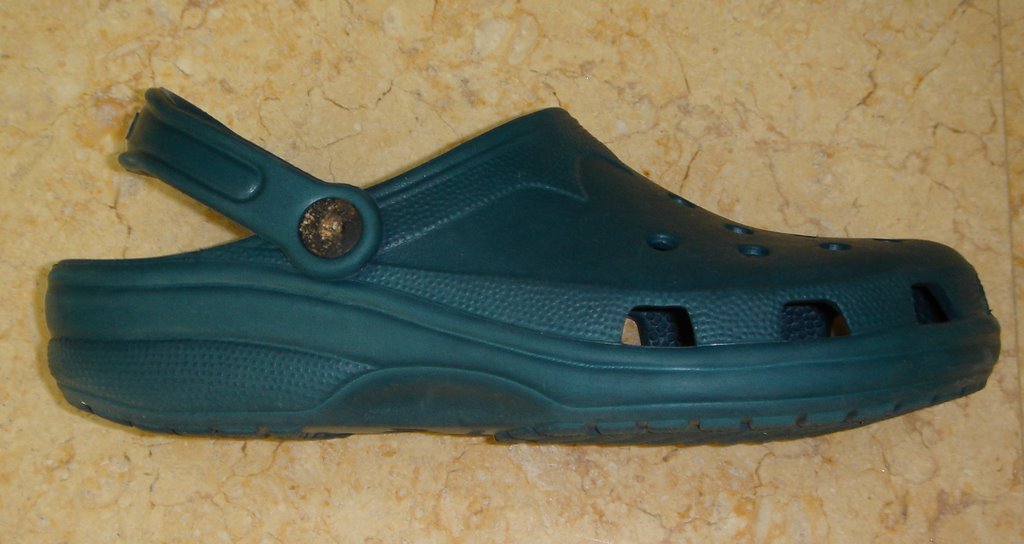
Damn ugly.
But damn comfortable.
Especially for people with plantar fasciitis (like me!).
I luuurve my turquoise blue flip flop crocs. ☺
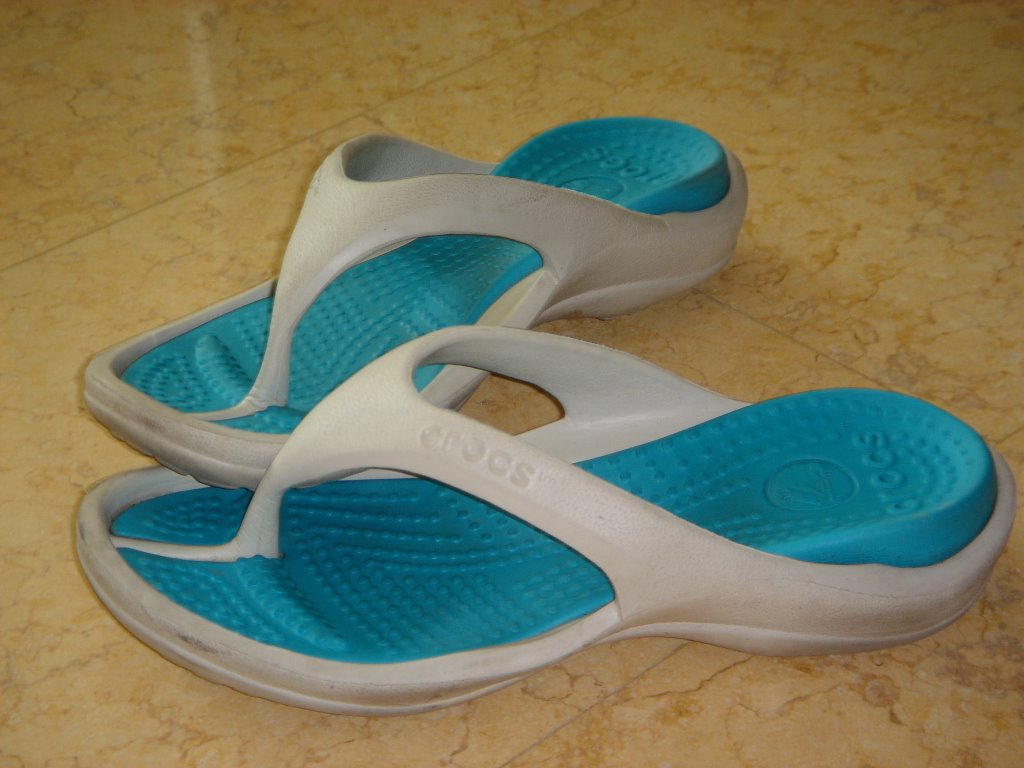
Monday, August 21, 2006
Mind-boggling
My jaw dropped & I could hardly believe what I was reading today in the Straits Times. One of the Singaporeans interviewed about what their hopes & wishes are, & their reaction to PM Lee Hsien Loong's National Day speech was a working mum, Mdm Kimberlie Chong. She is a mother of 4, & director of a business she runs with her husband. I reproduce part of the answer which she gave that had me gasping in disbelief.
Madam Chong was also pleased with the stress placed on schools to teach young Singaporeans to acknowledge their roots.
"Parents these days simply don't have the time to teach their children such subjects as moral values and Singapore's post-independent history."
Is it a wonder that the kids are growing up the way they are? The "Me" mentality, materialism, etc. With parents like Mdm Chong who do not make the time to teach moral values to their kids, I'm not surprised. I had previously blogged on this very issue, & Mdm Chong's statement seems to support what I am seeing in parents & kids today, with child-caring being left predominantly to their domestic helpers.
Being a parent is not to be taken lightly. That's why I feel that the Baby Bonus is not something that is beneficial in the long run in producing a society that we want to be proud of. If one can't make time to raise your kids right, then don't have kids at all. Period.
Madam Chong was also pleased with the stress placed on schools to teach young Singaporeans to acknowledge their roots.
"Parents these days simply don't have the time to teach their children such subjects as moral values and Singapore's post-independent history."
Is it a wonder that the kids are growing up the way they are? The "Me" mentality, materialism, etc. With parents like Mdm Chong who do not make the time to teach moral values to their kids, I'm not surprised. I had previously blogged on this very issue, & Mdm Chong's statement seems to support what I am seeing in parents & kids today, with child-caring being left predominantly to their domestic helpers.
Being a parent is not to be taken lightly. That's why I feel that the Baby Bonus is not something that is beneficial in the long run in producing a society that we want to be proud of. If one can't make time to raise your kids right, then don't have kids at all. Period.
Sunday, August 20, 2006
MHC
Attended the SMA convention on MHC yesterday.
Take home message: MHCs are here to stay. And GPs will need to put their brains together & come up with a way of managing their practices in order to manage the managed care companies in a way that won't compromise on quality of care or cause them to lose their livelihood.
How did the local situation in the private GP sector arrive at this stage? $5 consults? Losing money because reimbursement for medicine is less than cost?
I have never set up my own clinic. Never wanted to because I knew the sacrifices it would entail as far as my personal life & quality time with family is concerned. But I never foresaw that competition would heat up to the point where docs would be willing to sign up with money-losing MHC contracts just so that they would gain (or hope to gain) market share.
One of the speakers mentioned that we need to include an accounting module in the GDFM course. I wholeheartedy agree. Perhaps it's even time to include a Business module in NUS's Medicine curriculum called "The Business of Medicine". Let's face facts. Medicine is not all about altruism; in order to survive in this dog-eat-dog world, we need to be wise to the ways of the world.
After all, doctors set up clinics to treat patients, and yes, there will be patients who may not be able afford to pay for medications, and I know that doctors DO give allowance for this; but they also need to earn enough to pay their rent, their staff, feed their family, pay their monthly mortgage installments etc.
Take home message: MHCs are here to stay. And GPs will need to put their brains together & come up with a way of managing their practices in order to manage the managed care companies in a way that won't compromise on quality of care or cause them to lose their livelihood.
How did the local situation in the private GP sector arrive at this stage? $5 consults? Losing money because reimbursement for medicine is less than cost?
I have never set up my own clinic. Never wanted to because I knew the sacrifices it would entail as far as my personal life & quality time with family is concerned. But I never foresaw that competition would heat up to the point where docs would be willing to sign up with money-losing MHC contracts just so that they would gain (or hope to gain) market share.
One of the speakers mentioned that we need to include an accounting module in the GDFM course. I wholeheartedy agree. Perhaps it's even time to include a Business module in NUS's Medicine curriculum called "The Business of Medicine". Let's face facts. Medicine is not all about altruism; in order to survive in this dog-eat-dog world, we need to be wise to the ways of the world.
After all, doctors set up clinics to treat patients, and yes, there will be patients who may not be able afford to pay for medications, and I know that doctors DO give allowance for this; but they also need to earn enough to pay their rent, their staff, feed their family, pay their monthly mortgage installments etc.
Thursday, August 17, 2006
A Doc's Life - More Memorable Moments (P.S. 8)
Scenario: 4th year Med School; infectious disease rotation
At that time, the infamous Middle Road Hospital was still around (this is about 20 years ago). Patients with skin problems or STD’s were managed there. (I've always wondered about this strange combination ☺).
As part of our posting, we were supposed to go on a field trip to a red light district to see how prostitutes are “managed”. There were 3 main districts: Johore Road, Desker Road & Geylang. I think most of us were hoping to see Geylang, where it is supposed to be the most “high class” of the 3, with specially designed beds & other contraptions in the brothels (whether this is true or not, I have no idea ☺).
Anyway, my group was sent to Desker Road with a social worker. Basically, what the medical social worker needed to do was to make sure that the “workers” had been keeping up with their regular visits to Middle Road for tests to ensure that they were “disease-free”. Those who were cleared were given green ID cards, which they had to show to the MSW who did spot checks.
There is a widely held misconception that prostitution is illegal in Singapore. Well, that’s not true. As long as the sex worker worked in his/her registered brothel & was holding a valid green card, it was OK. However, if they solicited their services on premises other than the brothel, they could be arrested. I am assuming that this, or a system similar to this, still holds true.
Desker Road is in a not too great area of the city. The brothels were located in old pre-war shophouses. Inside, the space was subdivided into spartan looking cubicles each containing a bed & a sink. Each brothel had its own “type” of sex workers:
a) Women
b) Old women – and I mean old. The lady whom we saw there looked like someone’s grandmother. In fact, she was wearing a traditional sam-foo type of outfit. We later found out that she REALLY WAS someone’s grandmother. When we asked her why she was still doing this kind of work, she said that she needed the money to support her (useless, IMHO) son who was already in his 30’s, and toddler grandson. Sad, really.
c) “Women” – transvestites, who looked more female than the real women; they were beautiful with gorgeous slim & toned bodies. They also tended to have exaggerated feminine gestures, & dressed in extremely revealing clothing (think: blouse made of some kind of net-like material, with no undergarments). One of them told us that "he" was saving up for gender reassignment surgery.
Surprisingly, the highest rate for service was for category c. At that time, it was between S$30 to S$40 per session. The poor old lady only earned $5 to $10 per session, while the “regular” women earned about $25 per session.
On leaving the brothels, we walked through the alleyway behind the shophouses, and there were vendors with tables set-up there, selling different kinds of devices supposed to enhance one’s erotic experiences! We were really quite surprised to see these things being sold openly although we (innocents that we were * GRIN*) couldn’t figure out how some of those things worked or where they were supposed to be fitted/worn!
An eye-opening experience.
At that time, the infamous Middle Road Hospital was still around (this is about 20 years ago). Patients with skin problems or STD’s were managed there. (I've always wondered about this strange combination ☺).
As part of our posting, we were supposed to go on a field trip to a red light district to see how prostitutes are “managed”. There were 3 main districts: Johore Road, Desker Road & Geylang. I think most of us were hoping to see Geylang, where it is supposed to be the most “high class” of the 3, with specially designed beds & other contraptions in the brothels (whether this is true or not, I have no idea ☺).
Anyway, my group was sent to Desker Road with a social worker. Basically, what the medical social worker needed to do was to make sure that the “workers” had been keeping up with their regular visits to Middle Road for tests to ensure that they were “disease-free”. Those who were cleared were given green ID cards, which they had to show to the MSW who did spot checks.
There is a widely held misconception that prostitution is illegal in Singapore. Well, that’s not true. As long as the sex worker worked in his/her registered brothel & was holding a valid green card, it was OK. However, if they solicited their services on premises other than the brothel, they could be arrested. I am assuming that this, or a system similar to this, still holds true.
Desker Road is in a not too great area of the city. The brothels were located in old pre-war shophouses. Inside, the space was subdivided into spartan looking cubicles each containing a bed & a sink. Each brothel had its own “type” of sex workers:
a) Women
b) Old women – and I mean old. The lady whom we saw there looked like someone’s grandmother. In fact, she was wearing a traditional sam-foo type of outfit. We later found out that she REALLY WAS someone’s grandmother. When we asked her why she was still doing this kind of work, she said that she needed the money to support her (useless, IMHO) son who was already in his 30’s, and toddler grandson. Sad, really.
c) “Women” – transvestites, who looked more female than the real women; they were beautiful with gorgeous slim & toned bodies. They also tended to have exaggerated feminine gestures, & dressed in extremely revealing clothing (think: blouse made of some kind of net-like material, with no undergarments). One of them told us that "he" was saving up for gender reassignment surgery.
Surprisingly, the highest rate for service was for category c. At that time, it was between S$30 to S$40 per session. The poor old lady only earned $5 to $10 per session, while the “regular” women earned about $25 per session.
On leaving the brothels, we walked through the alleyway behind the shophouses, and there were vendors with tables set-up there, selling different kinds of devices supposed to enhance one’s erotic experiences! We were really quite surprised to see these things being sold openly although we (innocents that we were * GRIN*) couldn’t figure out how some of those things worked or where they were supposed to be fitted/worn!
An eye-opening experience.
Wednesday, August 16, 2006
A Doc's Life - More Memorable Moments (P.S. 7)
Scenario: Pediatric Surgery Department of a large local hospital
This was where I did a 6-month rotation. This is where I:
• found out I was pregnant with my first son; had hyperemesis gravidarum due to aforementioned pregnancy, resulting in my having to run out during ward rounds to throw up, asking the nurse to jab me with IM Dramamine during one of my calls, and almost throwing up on a patient when I was assisting the on-call consultant in a laparotomy. The sight & smell of gas-filled loops of ischemic, necrotic intestines which popped eagerly out of the neonate’s abdominal cavity was not a pleasant one, pregnant or not;
• saw my first (& only) omphalocele;
• learnt how to do laser circumcision. And I am proud to say that my handiwork was pretty good too. Thing about using lasers is that you have to have good hand-eye-foot co-ordination. Hand because you have to target the laser, eye because you have to see what you are doing (duh) & foot because that’s how you turn the laser beam on & off (or shoot the laser, as a layman would say). There was a fellow from another Asian country who wasn’t terribly good with his hands, & one time, when I was assisting him, I saw him inadvertently “shoot” the laser at the glans penis – he didn’t lift his foot off fast enough. My eyes widened in horror & I cringed in empathy (although I am female, I could still imagine how sensitive that area is). Fortunately, it was a very small, very superficial burn.
• was taught how to differentiate between abdominal guarding & voluntary rigidity (in babies & children, who tend to be more sensitive to being palpated, this can be quite hard to do).
• developed a phobia of calling up radiologists on call to help confirm & manage intussusception. For some reason, certain radiologists were terribly unfriendly, and seemed to do the barium enemas very grudgingly. I often wished I could have told them: hey, I don’t like waking you up in the middle of the night either, but this kid is in pain, & signs point to a likely diagnosis of intussusception, you know!
• learnt that projectile vomiting in babies with pyloric stenosis is REALLY projectile, if you know what I mean;
• realized that many “head injury” patients tended to be admitted at night. I think the parents had no time to worry until after dinner, when fearsome thoughts & scenarios start flashing through their heads about the bump on their DDC’s* heads although the bump may have been sustained a week ago.
*DDC = Dear Darling Children
This was where I did a 6-month rotation. This is where I:
• found out I was pregnant with my first son; had hyperemesis gravidarum due to aforementioned pregnancy, resulting in my having to run out during ward rounds to throw up, asking the nurse to jab me with IM Dramamine during one of my calls, and almost throwing up on a patient when I was assisting the on-call consultant in a laparotomy. The sight & smell of gas-filled loops of ischemic, necrotic intestines which popped eagerly out of the neonate’s abdominal cavity was not a pleasant one, pregnant or not;
• saw my first (& only) omphalocele;
• learnt how to do laser circumcision. And I am proud to say that my handiwork was pretty good too. Thing about using lasers is that you have to have good hand-eye-foot co-ordination. Hand because you have to target the laser, eye because you have to see what you are doing (duh) & foot because that’s how you turn the laser beam on & off (or shoot the laser, as a layman would say). There was a fellow from another Asian country who wasn’t terribly good with his hands, & one time, when I was assisting him, I saw him inadvertently “shoot” the laser at the glans penis – he didn’t lift his foot off fast enough. My eyes widened in horror & I cringed in empathy (although I am female, I could still imagine how sensitive that area is). Fortunately, it was a very small, very superficial burn.
• was taught how to differentiate between abdominal guarding & voluntary rigidity (in babies & children, who tend to be more sensitive to being palpated, this can be quite hard to do).
• developed a phobia of calling up radiologists on call to help confirm & manage intussusception. For some reason, certain radiologists were terribly unfriendly, and seemed to do the barium enemas very grudgingly. I often wished I could have told them: hey, I don’t like waking you up in the middle of the night either, but this kid is in pain, & signs point to a likely diagnosis of intussusception, you know!
• learnt that projectile vomiting in babies with pyloric stenosis is REALLY projectile, if you know what I mean;
• realized that many “head injury” patients tended to be admitted at night. I think the parents had no time to worry until after dinner, when fearsome thoughts & scenarios start flashing through their heads about the bump on their DDC’s* heads although the bump may have been sustained a week ago.
*DDC = Dear Darling Children
Goosebump moments
OMG. Wow. More goosebump moments this week on Rockstar Supernova - Ryan Star singing Phil Collin's "In The Air Tonight" & my fave, Dilana singing the classic "Cat's in the Cradle" by Harry Chapin. Awesome.
It's strange isn't it, how your body responds to certain moments of a musical performance or a movie - chills start to run down your spine, & goosebumps form on your skin, & sometimes you even feel the sting of tears in your eyes.
"The Sound of Music" - when the von Trapps performed Edelweiss before fleeing Austria.
Watching Jason Mraz perform live at the Esplanade.
Watching & listening to my sons perform an acoustic guitar version of "Sweet Child of Mine" in perfect synchrony.
Hearing the Vienna Boys Choir.
Singing along to ABBA songs during Mama Mia.
Goosebump moments, all of them.
It's strange isn't it, how your body responds to certain moments of a musical performance or a movie - chills start to run down your spine, & goosebumps form on your skin, & sometimes you even feel the sting of tears in your eyes.
"The Sound of Music" - when the von Trapps performed Edelweiss before fleeing Austria.
Watching Jason Mraz perform live at the Esplanade.
Watching & listening to my sons perform an acoustic guitar version of "Sweet Child of Mine" in perfect synchrony.
Hearing the Vienna Boys Choir.
Singing along to ABBA songs during Mama Mia.
Goosebump moments, all of them.
Tuesday, August 15, 2006
A Doc's Life - More Memorable Moments (P.S. 6)
This letter to the papers today reminds me of the naivete of some of the patients when it comes to matters related to their health or bodily functions.
Scenario: 3rd year Med School - Community health project for SMPH (Social Medicine & Public Health, now known as COFM - Community Occupational & Family Medicine). My clinical group did a project on hypertension & obesity; to gather data, we had to go to various units in HDB estates to measure BP, take height & weight etc.
Head of this particular family was a gentleman in his 40's with 4 daughters. As we were about to leave after gathering the neccessary info, he pulled me aside & asked: "I only have daughters. Is it because I only eat fish & don't eat meat?"
Me: "Er, no."
Him: "So what kind of diet should I take so that I can have a son."
Me: "Er, doesn't matter, what you eat won't affect the sex of your child. But for your health, please eat a balanced diet."
Not sure if he believed me or not.
Scenario: 3rd year Med School - Community health project for SMPH (Social Medicine & Public Health, now known as COFM - Community Occupational & Family Medicine). My clinical group did a project on hypertension & obesity; to gather data, we had to go to various units in HDB estates to measure BP, take height & weight etc.
Head of this particular family was a gentleman in his 40's with 4 daughters. As we were about to leave after gathering the neccessary info, he pulled me aside & asked: "I only have daughters. Is it because I only eat fish & don't eat meat?"
Me: "Er, no."
Him: "So what kind of diet should I take so that I can have a son."
Me: "Er, doesn't matter, what you eat won't affect the sex of your child. But for your health, please eat a balanced diet."
Not sure if he believed me or not.
Hearing Things
Hmm.
I wonder if I am hearing things. I thought I heard on the news on radio yesterday about scholarships being offered by A*Star to foreign students with a condition that they become Singapore citizens. I looked for it in the Straits Times yesterday & today. Nada. I tried searching for it on the Channel NewsAsia website. Nada. I tried looking for it on the Today Online website. Still nada.
Hmm. Perhaps I am having auditory hallucinations.
Either that, or the Powers That Be are trying to spin it such that it will sound more "acceptable" to the average Singaporean before publicising it in the print media.
After all, citizenship is something that should be something held dear to one's heart; you can't buy patriotism or loyalty with material rewards (with the cost of higher education these days, a hefty sum in this case). And in order to become a Singapore citizen, these scholars would have to renounce their original citizenship as part of the process. Not something that should be done lightly.
That's why I was looking for details in the news on how this would be implemented.
Will we be attracting people who would change loyalties at the drop of a hat? What will happen if a few years down the road, after they have completed their studies, they decide that they are not willing to be Singaporeans after all? What will the authorities do? Confiscate their passports? Fine them? Make them pay $xxx,000? Can you really put a price on this?
I guess I really shouldn't be surprised if this is true. Sporting talents have already gone this route.
I anxiously await to hear more.
I wonder if I am hearing things. I thought I heard on the news on radio yesterday about scholarships being offered by A*Star to foreign students with a condition that they become Singapore citizens. I looked for it in the Straits Times yesterday & today. Nada. I tried searching for it on the Channel NewsAsia website. Nada. I tried looking for it on the Today Online website. Still nada.
Hmm. Perhaps I am having auditory hallucinations.
Either that, or the Powers That Be are trying to spin it such that it will sound more "acceptable" to the average Singaporean before publicising it in the print media.
After all, citizenship is something that should be something held dear to one's heart; you can't buy patriotism or loyalty with material rewards (with the cost of higher education these days, a hefty sum in this case). And in order to become a Singapore citizen, these scholars would have to renounce their original citizenship as part of the process. Not something that should be done lightly.
That's why I was looking for details in the news on how this would be implemented.
Will we be attracting people who would change loyalties at the drop of a hat? What will happen if a few years down the road, after they have completed their studies, they decide that they are not willing to be Singaporeans after all? What will the authorities do? Confiscate their passports? Fine them? Make them pay $xxx,000? Can you really put a price on this?
I guess I really shouldn't be surprised if this is true. Sporting talents have already gone this route.
I anxiously await to hear more.
Friday, August 11, 2006
World of Terror
I wonder if this will ever end. At the moment, I have great doubts. Terror begets terror.
Technology, the Internet, science - all this is literally at the fingertips of those who are warped in their minds. They think they are fighting for the greater good, whatever that may be. But all they do is create fear, and wreak havoc on society.
Perhaps that is what they want to achieve. To make us all afraid; to change our way of life; to do away with the peace of mind that most of us have. If that is their objective, I am afraid that they have already succeeded.
No more liquids on airplanes. Parents have to do taste tests on their children’s food before they are allowed on planes. Yeah, I think they have succeeded.
Will it ever end? Maybe. But it will take a wake-up call of unprecedented nature like a huge catastrophe of massive proportions. Or divine intervention.
That’s how optimistic I am.
Technology, the Internet, science - all this is literally at the fingertips of those who are warped in their minds. They think they are fighting for the greater good, whatever that may be. But all they do is create fear, and wreak havoc on society.
Perhaps that is what they want to achieve. To make us all afraid; to change our way of life; to do away with the peace of mind that most of us have. If that is their objective, I am afraid that they have already succeeded.
No more liquids on airplanes. Parents have to do taste tests on their children’s food before they are allowed on planes. Yeah, I think they have succeeded.
Will it ever end? Maybe. But it will take a wake-up call of unprecedented nature like a huge catastrophe of massive proportions. Or divine intervention.
That’s how optimistic I am.
Wednesday, August 09, 2006
Rock Star: Supernova
This show airs every Wednesday night at 8 pm...the same time as Singapore Idol. I hate to say this but, everytime I tune in to this program, I switch to SI during the breaks, & almost immediately, I switch back. How do you compare?
THIS...is talent.
One word: Dilana.
She. Rocks. Big. Time.
Check out her version of the Johnny Cash classic "Ring of Fire". "Ring of Fire"??? you may ask yourself. But if she released this as a single tomorrow, I betcha it would be a hit.
Not convinced? Check out this...her rendition of Cyndi Lauper's "Time After Time"...
Or this...
No matter what kind of music she chooses, she makes the song her own. She has been the most consistent of all the performers (although Ryan Star did give a very sexy, soulful version of REM's "Losing My Religion" last week) & every week, her performances with her powerful throaty vocals have not failed to deliver.
Goosebumps, every week.
THIS...is talent.
One word: Dilana.
She. Rocks. Big. Time.
Check out her version of the Johnny Cash classic "Ring of Fire". "Ring of Fire"??? you may ask yourself. But if she released this as a single tomorrow, I betcha it would be a hit.
Not convinced? Check out this...her rendition of Cyndi Lauper's "Time After Time"...
Or this...
No matter what kind of music she chooses, she makes the song her own. She has been the most consistent of all the performers (although Ryan Star did give a very sexy, soulful version of REM's "Losing My Religion" last week) & every week, her performances with her powerful throaty vocals have not failed to deliver.
Goosebumps, every week.
Monday, August 07, 2006
For Trekkies...
All you Trekkies out there, check out this video which was created when a rumor went round that Matt Damon is going to be starring as Capt Kirk in the next Star Trek movie! It's a hoot! Goes to show how strongly Trekkies feel about this beloved franchise.
I admit that I consider myself a Trekkie as far as Star Trek: The Next Generation is concerned, & have even attended a couple of conventions in the US, but I'm not as fanatical as some of the weirdos out there!!!
I admit that I consider myself a Trekkie as far as Star Trek: The Next Generation is concerned, & have even attended a couple of conventions in the US, but I'm not as fanatical as some of the weirdos out there!!!
Sunday, August 06, 2006
A Fairy Tale
For those who went to watch "The Lady in the Water" expecting a tale of paranormal twists a la The Sixth Sense, you will be disappointed. M. Night Shyamalan's latest production is a modern day tale, a fairy tale, if you must.
I went in with an open mind, after having read the rather dismal reviews it received, & was rewarded with a story of faith, the restoration of hope & belief in the goodness of humanity. I have always enjoyed Paul Giamatti's performances, & he doesn't fail to deliver as the unlikely leading man with a tortured past of loss & suffering.
Mr Shyamalan slyly includes in his story, a character - a movie critic, no less- who, in a suspensely moment, narrates the developing storyline as if he were outside the story, before coming to a nasty end. I could appreciate his dig at the movie critics of the world!
I liked it.
I went in with an open mind, after having read the rather dismal reviews it received, & was rewarded with a story of faith, the restoration of hope & belief in the goodness of humanity. I have always enjoyed Paul Giamatti's performances, & he doesn't fail to deliver as the unlikely leading man with a tortured past of loss & suffering.
Mr Shyamalan slyly includes in his story, a character - a movie critic, no less- who, in a suspensely moment, narrates the developing storyline as if he were outside the story, before coming to a nasty end. I could appreciate his dig at the movie critics of the world!
I liked it.
why
"conflict in the middle east"
a recurrent headline
from as far back as i can remember
why?
i didn't understand
i don't understand
jews
muslims
christians
killing
and being killed
the hatred ripples
far & wide
now our neighbours
are sending "support"
more lives
to kill
& to be killed
so much hate
too overwhelming to understand
why?
a recurrent headline
from as far back as i can remember
why?
i didn't understand
i don't understand
jews
muslims
christians
killing
and being killed
the hatred ripples
far & wide
now our neighbours
are sending "support"
more lives
to kill
& to be killed
so much hate
too overwhelming to understand
why?
Friday, August 04, 2006
Entourage
I find myself strangely hooked to a new HBO series, Entourage.
Season 1, comprising of only 8 episodes, is currently playing on Tuesday nights at 9 pm on HBO (Starhub Cable channel 60). Season 3 is now being screened in the US.
This Emmy nominated series is about the celebrity lifestyle of a movie star, Vince Chase (played by pretty boy Adrian Grenier) & his entourage of childhood pals comprising of his brother, Drama (Kevin Dillon), best friend/Manager, Eric (Kevin Conolly), and Turtle the “COO” of his household (Jerry Ferrara). On the sidelines are his agent (ably played by Jeremy Piven), and publicist (Debi Mazar).
At first glance, one is surprised at the success of this series of half hour episodes. After all, how many of us can relate to the extravagant lifestyle of the rich & the famous. But I guess celebrite is such a draw these days as evidenced by the appeal of gossip newspapers, & the way papparazi is drawn to taking otherwise mundane pictures of Brad Pitt crossing the street, or Britney Spears drinking a cup of coffee – The People want to see such things.
Anyway, it is interesting to watch this supposed insider look at how the celebs really live (after all, Mark Wahlberg is one of the executive producers). Loose women & one night stands, smoking pot, spending ridiculous amounts of money (eg splurging >$300,000 on a car, then returning it to the dealer the next day) – all the clichés by which we think of how these Others live, you name it, it’s there, & couldn’t be further from how we plebians live.
It’s probably morbid curiosity that draws us viewers in…
Season 1, comprising of only 8 episodes, is currently playing on Tuesday nights at 9 pm on HBO (Starhub Cable channel 60). Season 3 is now being screened in the US.
This Emmy nominated series is about the celebrity lifestyle of a movie star, Vince Chase (played by pretty boy Adrian Grenier) & his entourage of childhood pals comprising of his brother, Drama (Kevin Dillon), best friend/Manager, Eric (Kevin Conolly), and Turtle the “COO” of his household (Jerry Ferrara). On the sidelines are his agent (ably played by Jeremy Piven), and publicist (Debi Mazar).
At first glance, one is surprised at the success of this series of half hour episodes. After all, how many of us can relate to the extravagant lifestyle of the rich & the famous. But I guess celebrite is such a draw these days as evidenced by the appeal of gossip newspapers, & the way papparazi is drawn to taking otherwise mundane pictures of Brad Pitt crossing the street, or Britney Spears drinking a cup of coffee – The People want to see such things.
Anyway, it is interesting to watch this supposed insider look at how the celebs really live (after all, Mark Wahlberg is one of the executive producers). Loose women & one night stands, smoking pot, spending ridiculous amounts of money (eg splurging >$300,000 on a car, then returning it to the dealer the next day) – all the clichés by which we think of how these Others live, you name it, it’s there, & couldn’t be further from how we plebians live.
It’s probably morbid curiosity that draws us viewers in…
Saturday, July 29, 2006
Cosmetic Surgery
Has anyone noticed lately that roads are being repaved left, right & center?
Wonder if it has anything to do with the upcoming Big Meetings?
;)
Wonder if it has anything to do with the upcoming Big Meetings?
;)
Sex (or the lack thereof)
Are Singaporeans ready for this?
Not many patients consult GP’s for sexual problems. I don’t mean sub-fertility or menstrual-related problems. I’m talking about actual problems with the physical act of intercourse. ED is probably the most common sexual problem for which males consult their GP’s since the advent of the little blue pill (Viagra, for those who have been living under a rock). Even then, most patients with ED feel more comfortable consulting male doctors.
I have had a few female patients come to me with the distressing problem of vaginismus. They were generally very embarrassed by their problem - so much so that one of them waited a whole year of non-consummation of her marriage before striking up the courage to talk to me about it! It can be extremely distressing for a couple faced with this situation, as they are often too embarrassed to talk to anyone about it. I believe this is just the tip of the iceberg; God knows how many people live with problems (emotional as well as physical) with their sex lives. And judging from responses from the patients who have approached me, they are unaware that there are specialists out there who can help with these problems.
In a conservative society like ours, sex, let alone sexual problems is a difficult topic to bring up for discussion over coffee or the dinner table. And, conservative or not, parents are probably the last people on earth one would want to discuss one’s sexual life with!
And it doesn’t help matters that sex education is so lacking in the local schools. I think the majority of teachers are ill-equipped to handle this sensitive subject. For crying out loud, many people (teachers included) can’t even utter the words “vagina” & penis” out loud without humming & hah-ing or sniggering! I remember going through my son’s Primary 5 health education book when he was still attending a local all boys school, & seeing a chapter on the human reproductive system. When I asked him if his teacher (a lady) had gone through that chapter yet, he said yes, but she skipped the bits on the female organs! I was quite astounded.
Judging from the very successful turnout of the first sex exhibition held in South-east Asia last year, I think Singaporeans are more than ready! Heck, I was surprised to find this on a government website! Yeah...I think we're ready...
Not many patients consult GP’s for sexual problems. I don’t mean sub-fertility or menstrual-related problems. I’m talking about actual problems with the physical act of intercourse. ED is probably the most common sexual problem for which males consult their GP’s since the advent of the little blue pill (Viagra, for those who have been living under a rock). Even then, most patients with ED feel more comfortable consulting male doctors.
I have had a few female patients come to me with the distressing problem of vaginismus. They were generally very embarrassed by their problem - so much so that one of them waited a whole year of non-consummation of her marriage before striking up the courage to talk to me about it! It can be extremely distressing for a couple faced with this situation, as they are often too embarrassed to talk to anyone about it. I believe this is just the tip of the iceberg; God knows how many people live with problems (emotional as well as physical) with their sex lives. And judging from responses from the patients who have approached me, they are unaware that there are specialists out there who can help with these problems.
In a conservative society like ours, sex, let alone sexual problems is a difficult topic to bring up for discussion over coffee or the dinner table. And, conservative or not, parents are probably the last people on earth one would want to discuss one’s sexual life with!
And it doesn’t help matters that sex education is so lacking in the local schools. I think the majority of teachers are ill-equipped to handle this sensitive subject. For crying out loud, many people (teachers included) can’t even utter the words “vagina” & penis” out loud without humming & hah-ing or sniggering! I remember going through my son’s Primary 5 health education book when he was still attending a local all boys school, & seeing a chapter on the human reproductive system. When I asked him if his teacher (a lady) had gone through that chapter yet, he said yes, but she skipped the bits on the female organs! I was quite astounded.
Judging from the very successful turnout of the first sex exhibition held in South-east Asia last year, I think Singaporeans are more than ready! Heck, I was surprised to find this on a government website! Yeah...I think we're ready...
Wednesday, July 26, 2006
A Doc's Life - More Memorable Moments (P.S. 5)
Subject: East is East and West is West?
In a society where a large proportion of the population still ascribes to traditional (or, in a more currently used term, alternative) medicine, I would get asked questions that, as a Western-trained doctor, I found difficult to answer.
A typical exchange:
Me: ”I’ll give you some medicine to help with your sore throat & phlegm. This is probably due to a viral infection, & you should get over it in a few days.”
Patient: ” Is it heatiness*? I ate a lot of chocolates yesterday.”
Me: “Er, I’m sorry, I really can’t say if it’s heaty or not, as I was not trained in Chinese medicine. This is probably a viral infection.”
I usually don’t brush it off as nonsense, as I like to keep an open mind. I occasionally even agree with the patient if I am too tired to explain, & the patient goes away happy that he/she has self-diagnosed the cause of his/her symptoms.
Another example involves a patient who is either recuperating from surgery or from an injury. He/she would ask me to confirm the “fact” that they should abstain from food like chicken & prawns as they are ”toxic”, & also from dark soya sauce as it would result in a hyperpigmented scar. I try to give them my opinion, but I usually don’t protest too violently, as I know that no matter what I say, these beliefs, which have been handed down through God knows how many generations, will persist; and they would abstain from those food items anyway.
*The concept of ”heatiness” & “coolness” is one held in Traditional Chinese Medicine to cause a variety of illnesses. Eg. Sore throat, phlegm, cough are attributed to one’s body being too “heaty”, often due to “heaty” foods like chocolates, anything fried, durians etc (the list goes on). Hence, “cooling” remedies like herbal teas are used to treat the symptoms.
In a society where a large proportion of the population still ascribes to traditional (or, in a more currently used term, alternative) medicine, I would get asked questions that, as a Western-trained doctor, I found difficult to answer.
A typical exchange:
Me: ”I’ll give you some medicine to help with your sore throat & phlegm. This is probably due to a viral infection, & you should get over it in a few days.”
Patient: ” Is it heatiness*? I ate a lot of chocolates yesterday.”
Me: “Er, I’m sorry, I really can’t say if it’s heaty or not, as I was not trained in Chinese medicine. This is probably a viral infection.”
I usually don’t brush it off as nonsense, as I like to keep an open mind. I occasionally even agree with the patient if I am too tired to explain, & the patient goes away happy that he/she has self-diagnosed the cause of his/her symptoms.
Another example involves a patient who is either recuperating from surgery or from an injury. He/she would ask me to confirm the “fact” that they should abstain from food like chicken & prawns as they are ”toxic”, & also from dark soya sauce as it would result in a hyperpigmented scar. I try to give them my opinion, but I usually don’t protest too violently, as I know that no matter what I say, these beliefs, which have been handed down through God knows how many generations, will persist; and they would abstain from those food items anyway.
*The concept of ”heatiness” & “coolness” is one held in Traditional Chinese Medicine to cause a variety of illnesses. Eg. Sore throat, phlegm, cough are attributed to one’s body being too “heaty”, often due to “heaty” foods like chocolates, anything fried, durians etc (the list goes on). Hence, “cooling” remedies like herbal teas are used to treat the symptoms.
Subscribe to:
Posts (Atom)